Success Story
About the client

The client is a prominent US-based media conglomerate known for its wide portfolio of publications and broadcast channels. With a valuation of $6.5 billion, the company has built a strong foothold in the industry through its flagship publication and an extensive network of local newspapers. Its content reaches more than 110 million readers every month, reflecting its scale and influence.
Client’s business challenges and requirements
Managing a wide network of newspapers and television stations through a single content system began to create operational friction. Each property had its own website, but the existing setup made it difficult to distribute content smoothly across platforms. Content creation was also limited by missing features such as hyperlinking and multimedia support. As audience numbers and internal users grew, the system struggled to keep up, leading to slower performance and occasional disruptions. The monolithic architecture further added complexity, making it harder for teams to navigate and work efficiently across different properties.
To support its growing digital presence, the client set out to modernize its content management approach. The goal was to move away from fragmented workflows and build a system that could support multiple newsrooms while maintaining consistency in content delivery. They wanted a solution that would simplify how stories are created, managed, and shared across publications and broadcast channels.
Key Requirements were to
Develop a modern CMS to streamline content sharing across newspapers and TV stations
Upgrade the existing system with improved performance and reliability
Build a scalable architecture to support growing traffic and user demand
Enable remote access for field reporters to create and update content in real time
Implement role-based access with defined permissions for different user groups
Support dynamic content delivery across devices including mobile, tablet, and desktop
Improve overall usability to make the platform easier for teams to navigate and use
Solution delivered by our team
The engagement began with a detailed discovery phase, where business analysts worked closely with the client to map out requirements and define a clear path forward. In collaboration with solution architects, the team designed a modern CMS built for flexibility, performance, and ease of use. The focus was on breaking away from legacy constraints and creating a system that could support multiple newsrooms, streamline content workflows, and scale with growing demand. With the right mix of technology choices and user-focused design, the new CMS was built to simplify content management while improving speed, reliability, and overall user experience.
Stand-out features of the solution included:
Transition to a Microservices Architecture
- Broke down the existing monolithic system into smaller, independent services
- Prioritized core modules like story management, media handling, and user authentication
- Reduced system dependency, making updates faster and less disruptive
- Improved scalability and allowed teams to work on different components independently
- Minimized downtime and lowered the risk of system-wide failures
Modern Technology Stack and Development Approach
- Selected Next.js for building modular and high-performance applications
- Ensured smooth integration with existing systems and workflows
- Used a combination of PHP (backend) and ReactJS (frontend) for key applications
- Built a flexible foundation that can adapt to future requirements
- Focused on performance, speed, and long-term maintainability
User-Centric Design and Interface
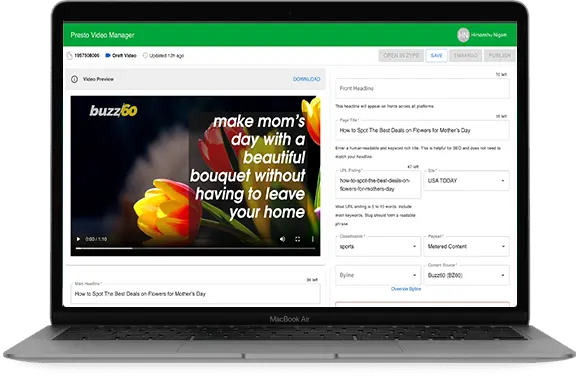
- Designed an intuitive interface to simplify navigation for editors and publishers
- Applied user-focused design principles to improve daily workflows
- Reduced complexity compared to the previous system
- Enabled faster onboarding for new users
Advanced Content Discovery and Search
- Introduced a “Content Discovery” tool for global search across all properties
- Allowed users to quickly locate content using filters like asset type, author, and publish status
- Improved visibility and reuse of existing content
- Reduced time spent searching for assets
Modular Asset Management System
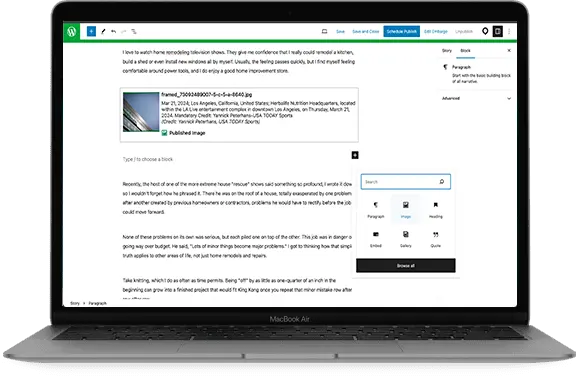
- Created separate applications for different content types like articles, videos, and images
- Replaced the earlier single-page asset management approach
- Enabled better control and customization for each asset type
- Allowed users to access and edit assets through unique IDs
Enhanced Metadata and Content Control
- Enabled detailed metadata management for each asset
- Allowed updates to descriptions, captions, credits, tags, and more
- Supported image editing features like cropping for different screen sizes
- Ensured changes to one asset do not affect others
Centralized Story Editor
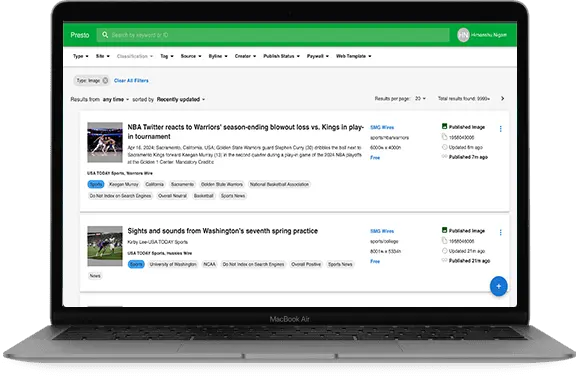
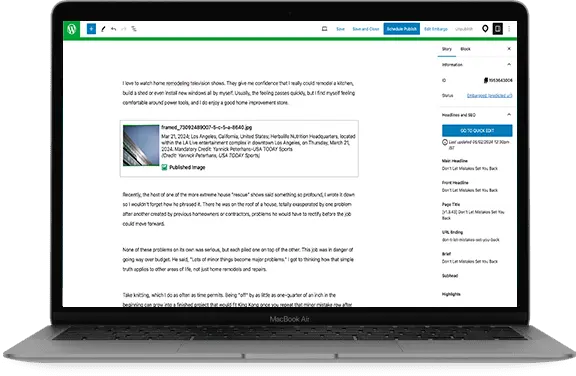
- Built a dedicated “Story Editor” for compiling and publishing content
- Allowed easy management of headlines, meta descriptions, and URLs
- Supported embedding of multimedia content within stories
- Enabled scheduling and publishing from a single interface
Role-Based Access and Remote Accessibility
- Implemented role-based permissions for different user groups
- Ensured secure and controlled access to content and features
- Enabled field reporters to create and update content remotely
- Supported real-time publishing, even from low-connectivity environments
Optimized Content Delivery Across Devices
- Enabled dynamic content delivery based on device type
- Ensured consistent experience across mobile, tablet, and desktop
- Improved performance and loading speed for end users
- Delivered a more personalized content consumption experience
Impact on the client’s business
The transition to the new CMS was completed smoothly, with no disruption to ongoing operations. Teams across newsrooms were able to adopt the system quickly, as it simplified everyday tasks for journalists and publishers. Content creation and publishing became faster and more structured, helping teams work more efficiently under tight timelines.
With the new architecture in place, the platform now handles high traffic volumes with ease, maintaining consistent performance even during peak usage. The improvements in speed, reliability, and usability have strengthened day-to-day operations, leading to a continued partnership with the client for future technology initiatives.