

Business Situation & Requirements
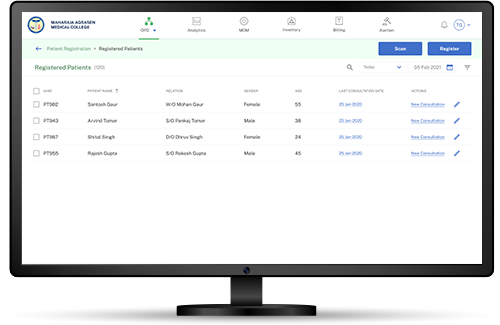
Healthcare institutions today face increasing pressure to deliver efficient, transparent, and data-driven care while managing complex operational workflows. The client faced significant operational gaps due to the absence of a digital interface for data entry and visualization.
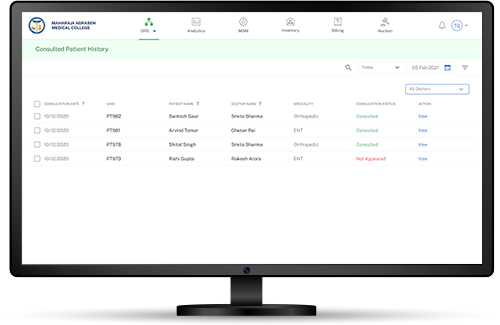
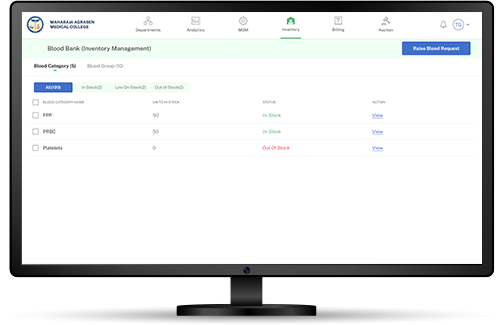
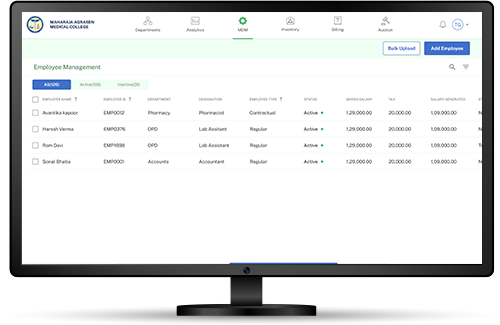
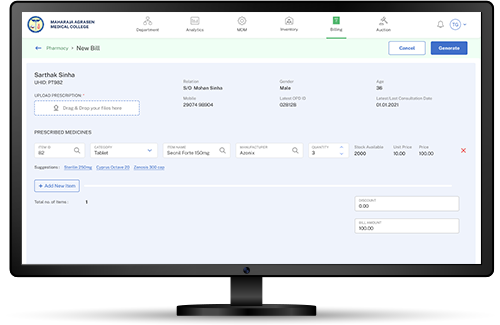
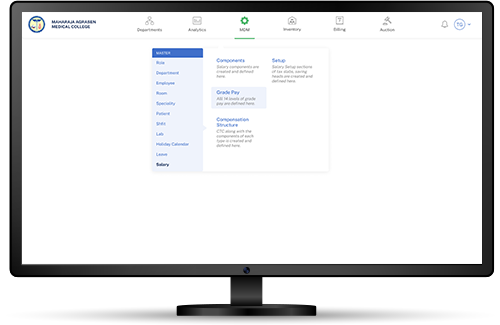
There were no structured records to track hospital inventory or asset utilization. Accounts management processes such as attendance automation, salary calculations, and arrears tracking were handled manually. Critical departments, including the blood bank, pharmacy, and laboratory, operated without automation, resulting in decentralized data, limited transparency, asset overestimation, and poor visibility into departmental workflows.
To address these challenges, the client required a comprehensive, customized Hospital Management System (HMS) to digitize and streamline day-to-day operations. The institution sought an experienced technology partner capable of driving end-to-end digital transformation across administrative, financial, and clinical functions. The client partnered with Unthinkable for its proven expertise in building scalable healthcare IT solutions, including Electronic Health Records (EHR), telehealth platforms, digital pharmacy systems, Hospital Information Systems (HIS), and practice management solutions.
The key requirements were:
Initiate the engagement with a structured discovery phase to map existing hospital workflows, assess high patient footfall scenarios, identify operational gaps, and define system requirements aligned with the hospital’s objectives.
Develop a robust Healthcare Information System that strengthens and supports existing processes without compromising overall efficiency or slowing down daily operations.
Enable simple and intuitive process automation, data entry, and data visualization to ensure smooth functioning and easy adoption by internal members.
Ensure the system is user-friendly and does not create barriers for the predominantly rural patient population served by the hospital.
Design the solution to manage and streamline overall data and process flows across the entire hospital and all respective departments.
Establish a centralized and integrated platform that enhances coordination, transparency, and operational control across administrative, financial, and clinical functions.
Ensure full compliance with DISHA guidelines by implementing robust data security, patient consent management, role-based access controls, encryption, and audit mechanisms to protect sensitive health information.