

Business Situation
When V2 Retail approached us, the problem was framed simply: “We need an e-commerce platform.”
However, a closer look revealed that it was not a standard e-commerce problem.
V2 Retail did not lack inventory. It had significant stock distributed across 300+ stores nationwide. The challenge was that none of this inventory was accessible to online customers, and the existing systems were not designed to support digital commerce. This was not an e-commerce gap. It was a store-led commerce problem. Stores were effectively acting as decentralized warehouses, with inventory and fulfilment distributed across locations.
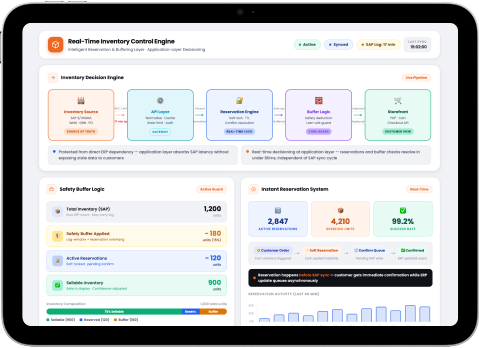
Secondly, the company operated on a SAP-based ERP that tracked store-level inventory. However, it was built for physical retail operations such as purchase orders, goods receipt, and inter-branch transfers. Inventory data had a 15–30 minute sync lag, and the system lacked support for online reservations, pick-pack-ship workflows, and a mechanism to expose store-specific inventory to a digital storefront. Building directly on top of this would have meant inheriting these limitations.
As a result, three critical gaps emerged. First, inventory remained invisible online. While 300+ stores held all available stock, there was no way to surface it to customers in real time.
Second, there was no fulfillment infrastructure in place. There were no defined pick-pack-ship processes, no scan-based validation, and no task-driven workflows for store staff. Online order execution did not exist at the store level.
Third, store operations were inherently offline-first. With a delayed ERP sync, the e-commerce layer risked displaying incorrect stock levels, resulting in failed orders and a poor customer experience.
To address this, the client needed a technology partner to design a system that could unlock the value of its distributed store network without disrupting existing operations.
Key requirements were:
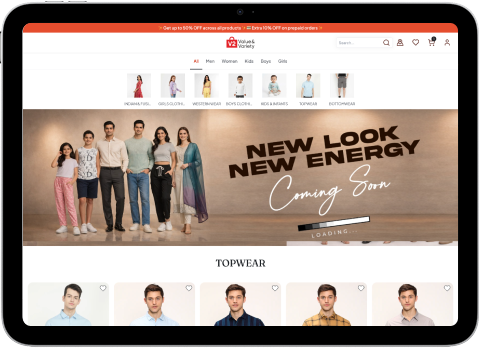
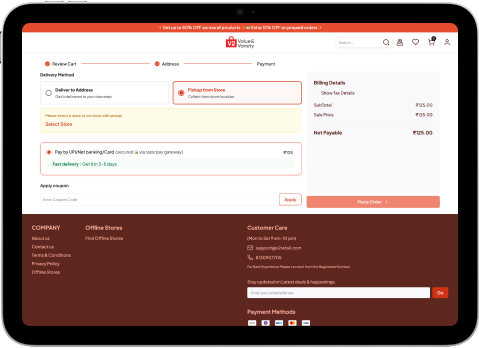
Build an e-commerce storefront with UPI, COD, and card payment support
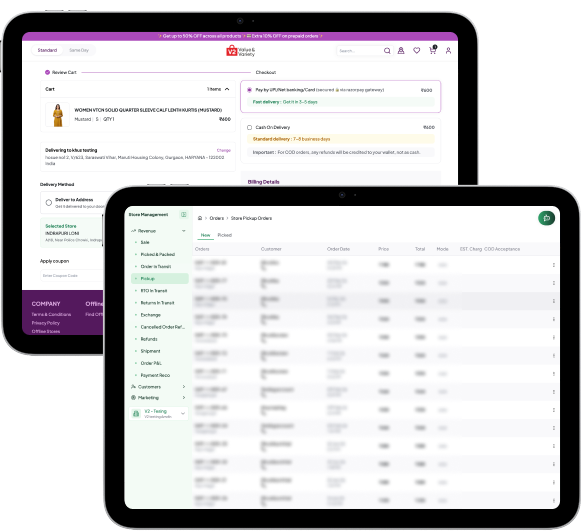
Design a fulfilment model leveraging stores as the primary fulfilment source
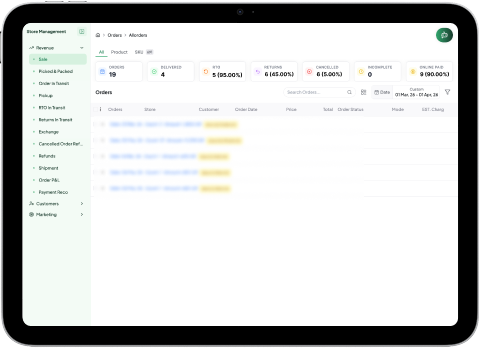
Develop an Order Management System (OMS) with real-time visibility across all store orders
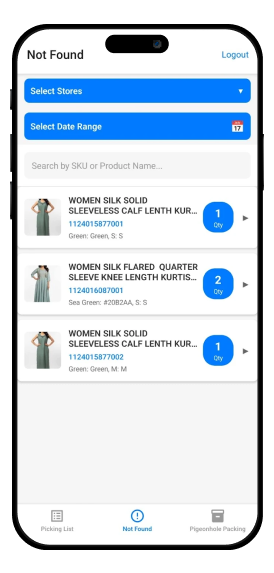
Build a store-facing Android application for pick, pack, and dispatch with scan-based validation
Integrate with SAP and POS systems without replacing existing infrastructure
Engineer an inventory sync mechanism that accounts for ERP lag without exposing incorrect stock