








 .Net
.Net Java
Java NodeJS
 Python
 PHP
PHP GO
GO AWS
AWS Microsoft Azure
 Google Cloud
 My SQL
 SQL Server
 MongoDB
 Amazon S3
 Amazon RDS
 Cassandra
 Linux
Linux Linode
 Jenkins
 Terraform
 Digital Ocean
 Ansible
 Chef
Chef Puppet
 Kubernetes
 Docker
 React
React Angular
 Vue.js
 Next.js
 Astro
Astro HTML5
HTML5 CSS
CSS IOS
IOS Android
 Xamarin
 Cordova
 PWA
PWA React Native
 Flutter
 Salesforce
 Adobe Commerce
 Power BI
 Oracle


Frequently asked questions (FAQs)
- What types of RPM platforms can you build?
We build a wide range of remote patient monitoring platforms depending on the care model you operate. This includes chronic care monitoring, post-acute recovery solutions, hospital-at-home programs, transitional care support, and multi-specialty RPM platforms for areas like cardiology, pulmonology, and endocrinology. We also develop white-label RPM platforms for healthcare companies that want to take a branded solution to market quickly without building the entire product from the ground up.
- Can your RPM software integrate with third-party devices and platforms?
Yes, Our RPM systems are designed to work with FDA-cleared medical devices, home monitoring kits, and IoT wearables from most major vendors. Whether the device connects via Bluetooth, cellular networks, or a cloud API, we work with the data securely and map it to your clinical workflows. This includes everything from simple vitals devices to more advanced digital therapeutics and IoMT sensors.
- Do you support mobile and web apps for RPM?
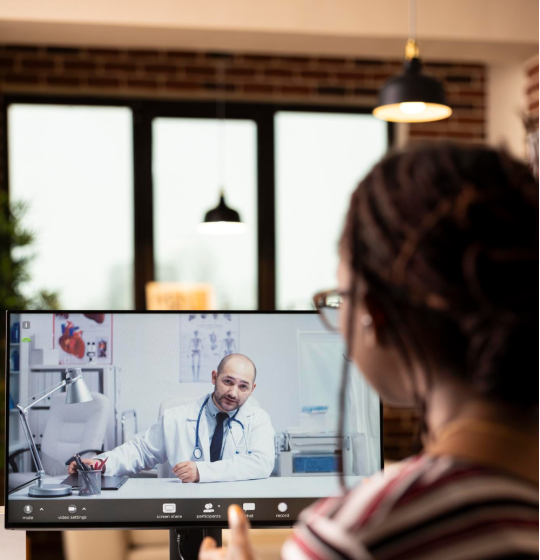
Absolutely. We create patient-friendly mobile apps that simplify onboarding, vitals submission, medication reminders, and symptom check-ins. For care teams, we design web dashboards that unify patient data, surface alerts, streamline triage, and improve care coordination. Both experiences are built to be intuitive for end users so that your RPM program drives long-term adoption.
- What features should an RPM software have?
A good RPM software should include real-time vitals monitoring, automated alerts, patient check-ins, care-plan management, secure messaging, telehealth capabilities, device integration, and reporting dashboards. These core features help care teams monitor patients remotely, intervene earlier, and coordinate care more efficiently.
- Which medical devices can integrate with your RPM software?
Our platform integrates with a broad list of clinical-grade devices used across chronic and acute care. This includes blood pressure monitors, glucometers, pulse oximeters, digital scales, ECG patches, thermometers, spirometers, and wearable trackers such as Apple Watch and Fitbit. If you use specific devices or vendors, we can typically integrate with them as well.
- How do you ensure HIPAA and FHIR compliance?
We take a security-first approach throughout the development lifecycle. That includes encrypted data transmission, role-based access, audit trails, secure hosting, and strict governance over how patient data is stored and shared. For interoperability, we follow FHIR and HL7 standards so your RPM system connects safely to EHRs and other clinical systems without introducing risk.
- What tech is used in RPM?
RPM relies on connected medical devices, cloud infrastructure, secure APIs, EHR integrations, and real-time analytics. We handle the complexity so your clinical teams interact only with what they need: accurate data, clear alerts, and easy-to-use tools that support their daily workflow.
- Can RPM platforms integrate AI or predictive analytics?
Yes. If your care model benefits from early identification of risk, we can integrate AI capabilities such as deterioration prediction, anomaly detection, risk scoring, and personalized recommendations. These tools help reduce avoidable escalations and support more proactive care management.
- Can RPM software be customized for specific clinical specialties?
Yes. Many organizations need specialty-focused workflows, and we design RPM modules accordingly. For instance, cardiology may require ECG review and rhythm tracking, while pulmonology may need spirometry trends or oxygen saturation alerts. We tailor the platform so each specialty sees the data and workflows most relevant to them.
- Do you offer post-launch support and maintenance?
We provide ongoing support to ensure your RPM program evolves smoothly. This includes feature updates, new device onboarding, compliance adjustments, integration enhancements, and continuous performance monitoring. As clinical needs change, we help your platform adapt without disrupting care delivery.