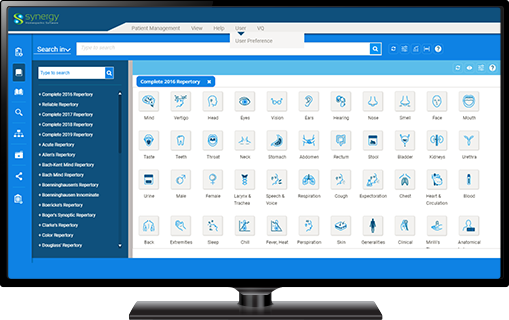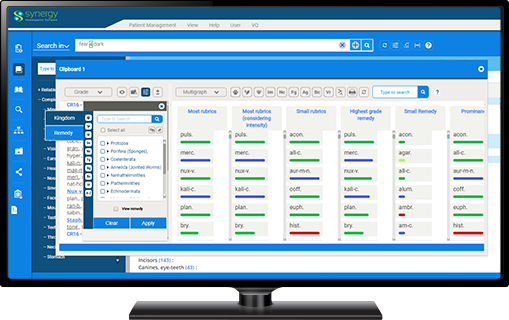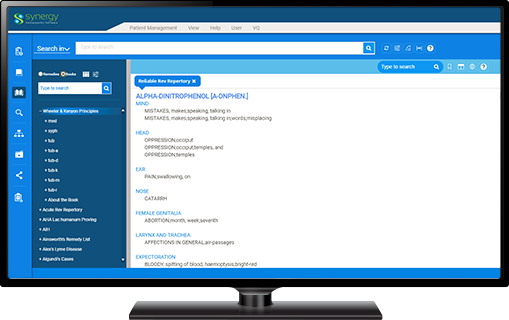


Business Situation & Requirements
The client faced critical performance challenges on their platform, VitalQuest, including high latency, slow load times, and limited concurrency, which negatively impacted the user experience.
The absence of robust search filters, combined with reliance on traditional text-based search, made it difficult for practitioners to construct complex queries. This resulted in delayed and inefficient search outputs, creating frustration and disrupting the case analysis workflow for homeopaths.
To overcome these limitations, the client aimed to modernize the platform and enhance its overall capabilities holistically. They required an intelligent, scalable solution powered by semantic search and conversational AI to enable more intuitive, context-aware query handling. Their objective was to improve speed, accuracy, usability, and system scalability, transforming VitalQuest into a smarter, faster, and future-ready digital platform.
Key Requirements were:
Conduct a comprehensive discovery and assessment phase to evaluate existing system performance, identify usability gaps, analyze practitioner workflows, and define a holistic modernization roadmap aligned with business goals and user expectations.
Redesign and modernize the VitalQuest platform with a fully revamped UI/UX, focusing on user journey optimization, improved information architecture, intuitive navigation, responsive design, and seamless multi-device accessibility to simplify complex case-taking workflows.
Develop and integrate advanced semantic search capabilities combined with an AI-powered conversational chatbot interface to enable natural language interactions, deliver context-aware and accurate results, and eliminate dependency on complex manual search strings.
Architect a scalable, high-performance database infrastructure capable of efficiently managing large volumes of structured and unstructured data across extensive homeopathic literature repositories.
Optimize the cloud-enabled system architecture to enhance performance, ensure low latency, support high concurrency, and enable real-time processing without compromising stability.
Implement enterprise-grade security measures, including data encryption, secure cloud infrastructure, role-based access controls, and compliance with HIPAA and other applicable US healthcare data protection standards to safeguard user privacy and confidentiality.