
Dec 09, 2025
Telemedicine, once a niche convenience, has become an integral part of the modern healthcare ecosystem in recent years. And it’s not just the COVID pandemic that triggered this shift. Both providers and patients are increasingly appreciating and embracing virtual care for better access, convenience, and efficiency in the long run. And artificial intelligence (AI) in telemedicine is adding fuel to the fire like never before.
Simply put, telemedicine is no longer just about video calls. Platforms offering AI-powered telemedicine services are redefining conventional telehealth through data insights, automation, and support for intelligent decision-making. Forward-thinking healthcare entities across the globe (the USA and UK especially) are leveraging smart solutions to check symptoms, monitor remotely, predict risks, and provide triage.
AI in Telemedicine: Key Benefits
In fact, by 2034, AI in telemedicine and telehealth is expected to grow at a rate of more than 36%. Also, 66% (2 out of 3) physicians in the USA are using AI for medical charts, billing, diagnosis, care plans, discharge instructions, etc.
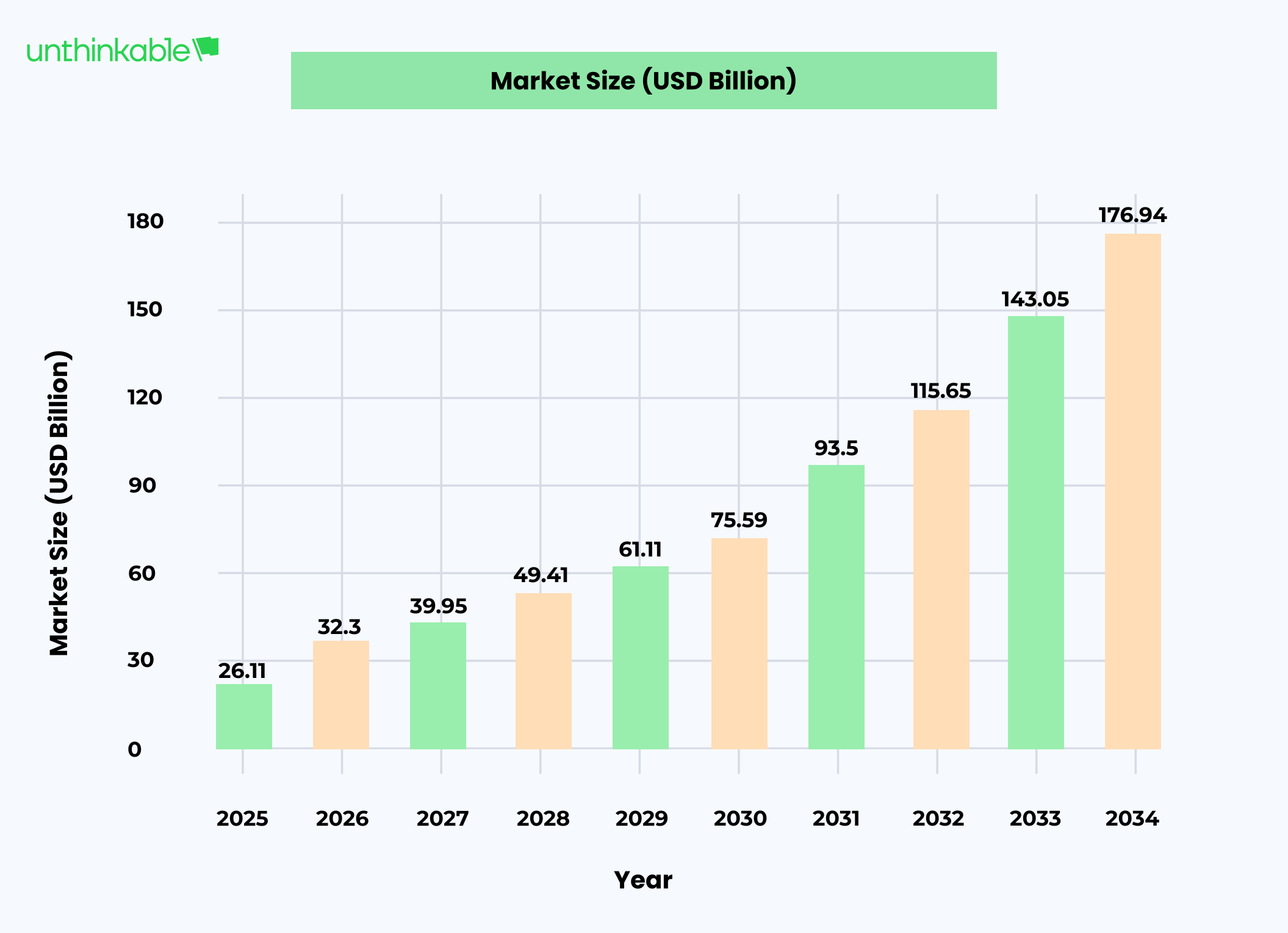
Now that we know the growth potential, let’s explore the importance and role of AI in telemedicine, advantages, challenges, and future trends.
Decoding AI in Telemedicine
AI-powered telemedicine chiefly revolves around the automation and augmentation of different elements of remote healthcare delivery. It banks on advanced algorithms like natural language processing (NLP), machine learning (ML), deep learning (DL), computer vision, and so on.
Now, traditional telehealth uses phone or video consultations to remotely replicate in-person patient visits. Artificial intelligence in virtual care, however, focuses on enhancing and streamlining care elements and even preventing grave situations.
Hence, intelligent telemedicine platforms enrich consultations and outcomes and drive growth via automation, personalization, predictive analytics, and decision support.
AI in Telemedicine: Key Benefits
AI-driven remote consultations benefit the telemedicine landscape in multiple ways and deliver value to health systems, providers, and patients:
Improved Remote Diagnostics
AI algorithms strengthen pattern recognition and image analysis by detecting and highlighting abnormalities that require clinician intervention. This is especially helpful for interpreting retinal scans, X-rays, dermatology photos, and other medical images.
Less Clinical Workload
A major perk of automated healthcare systems is that clinicians don’t have to handle repetitive or routine tasks like scheduling, documentation, and triage. And the reduced administrative pressure allows them to focus more on caring for patients. This matters because by 2030, there’s likely to be a shortage of 11 million healthcare workers.
Monitoring and Preventive Care in Real-Time
IoT or wearable health devices (AI-powered) allow providers to monitor vital signs remotely and constantly. This enables early detection of warning signs and on-time intervention, so the patient’s condition doesn’t worsen.
Better Accessibility and Affordability
AI-powered telemedicine allows patients in rural or inadequately served regions to access necessary care. Hence, patients can minimize spending on travel, physical visits, and hospitalization.
Improved Patient Engagement
Virtual assistants, AI health coaches, and chatbots for telehealth handle basic patient queries, send reminders for appointments and tests, and offer triage services. This boosts patient engagement and satisfaction. It’s no wonder that by 2028, the global market for healthcare chatbots is poised to be worth more than $430 million.
Data-Backed Insights
Predictive analytics is a key aspect of artificial intelligence in virtual care. Large datasets reflecting patient information can enable establishments to identify health trends, personalize treatment plans, and forecast risks.
Automatic Scheduling and Smart Triage
With AI, providers can optimize the scheduling of appointments, predict no-shows, and triage patients depending on the level of urgency. Besides reducing wait times, this can make providers more efficient and lead to better patient outcomes.
Personalized Care
AI can customize care plans based on real-time health monitoring, lifestyle data, and medical history. From a patient’s ideal medication dose and first aid treatment to lifestyle changes and exercises, AI can make dynamic and precise suggestions.
Major AI Technologies Driving Telemedicine
The following digital health AI technologies are apt for different use cases and tasks:
Machine Learning and Predictive Analytics
Machine learning in telemedicine, paired with predictive analytics, helps in analyzing trends, stratifying risks, predictive disease modelling, and forecasting chronic ailments.
Deep Learning
As a highly effective remote diagnostics technology, deep learning can analyze ECG data, X-rays, photos related to skin problems, MRIs, and retinal and CT scans.
Natural Language Processing
The use of NLP in medical apps, virtual assistants, and chatbots helps answer patient queries, find doctors, schedule consultations, confirm appointments, access reports, and so on. NLP also helps automate documentation and analyze transcripts of conversations between doctors and patients.
Computer Vision
This particular technology allows healthcare providers to remotely analyze images or videos associated with wounds, skin lesions, eye scans, etc. This ensures diagnostic and care accuracy without the need for in-person consultations.
Robotic Process Automation (RPA)
Clinicians can leverage RPA to automate administrative tasks like sending reminders to patients, appointment scheduling, billing, and processing of claims. Hence, healthcare providers can devote more energy and time towards diagnosis, treatment, and care.
Generative AI
Generative AI makes virtual healthcare delivery more efficient, scalable, and fast. It powers diagnostic accuracy, personalizes patient communication, streamlines documentation, and facilitates predictive health monitoring. A recent case study also indicates how AI-led digital platforms are reducing the rate of readmission by 30% and time spent on patient review by 40%.
AI in Telemedicine: Practical Use Cases
AI-powered telemedicine is transforming various real-world applications currently:
Remote Consultations and Clinical Decision Support
AI-powered virtual assistants and chatbots are screening patients, collecting information on symptoms, and suggesting optimal triage pathways based on the same. They are sharing self-care tips for mild situations while routing urgent or serious scenarios to physicians. Some intelligent telemedicine platforms are producing visit summaries and well-structured documents automatically.
Risk Stratification
Based on the symptoms reported by patients, their medical history, any lifestyle disorders, risk factors, and remote monitoring data (if applicable), AI can assess the urgency of a situation and categorize patients accordingly. And then it can suggest the most suitable triage pathway, as mentioned above. So, every patient gets the medical attention and care required without unnecessarily eating into a clinician’s time. And health establishments can also utilize resources more efficiently.
Remote Monitoring and Preventive Care
AI analytics engines can read vital signs (blood pressure, heart rate, etc.) in real-time from home monitoring kits, connected sensors, and wearables. They can study trends and patterns and alert clinicians in case something is off. Hence, intervening on time becomes possible for emerging or chronic conditions. For instance, pairing AI with portable ECG machines can help detect the possibility of a cardiac arrest beforehand.
Behavioral Support and Mental Health
AI-backed smart telehealth solutions and platforms can monitor a patient’s tone and sentiment as well as analyze data inputs. Based on the same, such platforms might offer guidance for self-help, route users to therapy chatbots, or suggest follow-up with a clinician. Hence, even for those living in underserved areas or experiencing problems at odd hours, accessing mental healthcare becomes feasible.
Smart Telemedicine Platforms for Hospitals or Health Systems
Health entities are increasingly integrating AI to optimize the allocation of resources, enhance the flow of patients, and predict no-shows. AI is also helping in minimizing wait times, automating documentation and follow-ups after discharge, and reducing burnout in clinicians.
Management of Chronic Ailments
As mentioned earlier, AI in telemedicine can craft personalized treatment plans based on symptoms, lifestyle data, patient history, genetics, and data from real-time monitoring. But there’s more to it. These plans are automatically adjusted when new data comes in. Hence, it’s easy to manage chronic conditions like hypertension, diabetes, or cardiovascular issues.
AI in Telemedicine: Challenges and Considerations
AI-led digital health transformation will undoubtedly simplify and improve life for patients, doctors, and healthcare establishments. However, for it to be safe, effective, and ethical, certain challenges must be resolved first:
Data Privacy and HIPAA/FDA Compliance
Patient data has been and will always be sensitive. Hence, it must be stored securely and encrypted end-to-end. There should be strict control over who can access such data. Also, nothing short of General Data Protection Regulation (GDPR) and Health Insurance Portability and Accountability Act (HIPAA)-compliant telemedicine will do. AI diagnostic tools might need to be cleared or approved by the FDA or an equivalent regulatory body, too.
Healthcare Interoperability and Integration
Seamless Electronic Health Record (EHR) integration with AI is essential for the long-term effectiveness of intelligent systems. It’s also necessary for AI systems to support healthcare interoperability standards, such as Fast Healthcare Interoperability Resources (FHIR). Otherwise, workflow disruptions, duplication, and silos might crop up.
Regulatory and Ethical Considerations
The following considerations require immediate attention:
- Patient Data Rights: It’s vital to maintain patients’ autonomy, ownership of data, consent, and opt-out options at all times.
- Transparency: Both patients and doctors must have a clear understanding of how AI makes decisions; otherwise, accountability and trust might be lacking.
- Algorithmic Bias: If an AI model is trained on datasets that aren’t representative enough, it might perform less satisfactorily for some demographic groups. And this can impact the equity of care.
- Real-World Validation: Many AI tools lack this validation since studies often involve controlled environments. Hence, large-scale deployment of such tools might lead to new challenges.
AI and Telemedicine: Emerging Trends
The following innovations bank on advanced AI, multiple streams of data, and better home-based care:
Multimodal AI
Multimodal AI is fast becoming the key to creating comprehensive patient profiles and increasing the accuracy of diagnoses. It combines different types of data, from audio (voice) and vitals (wearables) to image (photos or videos) and text (input from the patient). Combining patient history, description of symptoms, and heart rate data can help clinicians make better treatment plans, for instance.
Generative AI
Generative AI tools like Large Language Models (LLMs) are elevating healthcare automation in multiple ways, leading to better consistency and reduced workload for clinicians. Such tools automatically draft materials for patient education, summarize consultations, generate clinical documentation, suggest treatment plans, and offer second-opinion support.
IoT Devices and Wearables
Today, biosensors, patches, smartwatches, trackers, and remote monitoring kits are being widely integrated with intelligent telemedicine platforms. And this makes it easy to stay alert, predict possible complications, and prevent deterioration of the patient’s condition. In fact, by 2032, the global market for wearable medical devices will likely hit the $185 billion mark.
Personalized Digital Health
Telemedicine is no longer a one-size-fits-all affair, thanks to cutting-edge AI technologies. Diagnosis and treatment are being tailored today in line with individual lifestyle, genetic, and environmental factors. Machine learning in telemedicine is also helping in predicting mood and behavioral changes for better mental healthcare. Hence, there are fewer side effects, and patient safety and outcomes are improving.
AI-Backed and Decentralized Home Care
Home-based blood, imaging, and laboratory kits are being integrated with AI-powered health platforms. This means routine checkups, management of chronic diseases, and post-treatment follow-ups are easier than ever. Patients are benefiting from improved access, and hospitals have lesser workloads.
AI in Telemedicine: The Future Looks Promising
AI-powered telemedicine is quickly becoming the norm for futuristic healthcare entities. From virtual triage and remote diagnostics to predictive monitoring and tailored care plans, AI is illuminating the path to faster, smarter, and more accessible telehealth.
And the benefits are many – better access, early intervention, improved outcome, greater efficiency, and less clinician workload. However, it’s also essential to address challenges like telehealth compliance and security, algorithmic bias, data privacy, and interoperability.
At the same time, backed by generative and multimodal AI, home-based diagnostic kits, and wearables, telemedicine might soon emerge as the first care touchpoint. All in all, the future is bright for both providers and patients, since healthcare will likely become more efficient, equitable, flexible, and proactive.
About Author