Success Story
About the Client

The client is a major private healthcare provider in the UK, known for delivering personalized medical and surgical care. Specializing in complex and serious health conditions, the clinic network spans over 30 locations nationwide and serves more than 100,000 patients annually.
Business Situation
The UK’s healthcare sector has grown rapidly, but many clinic networks still rely on fragmented systems and manual processes that slow things down. One of the country’s top clinic chains with over 30 locations and more than 100,000 patients each year was facing similar hurdles. Their current practice management system (PMS) lacked the flexibility to keep up with modern clinical needs.
Instead of building an entirely new application, the client chose to upgrade their PMS by building on parts of the existing codebase, making the most of their earlier investment. The goal was to create a single, streamlined platform that could handle everyday tasks for doctors, consultants, and staff covering everything from booking appointments and managing patient records to tracking inventory and handling referrals.
To make this happen, they needed a tech partner who truly understood healthcare workflows. That’s where Unthinkable came in, with a strong background in building healthcare solutions and real-world experience in clinical environments. Our team stepped in to design and develop a scalable, web-based PMS that could connect all their clinics, cut down on admin work, and boost overall efficiency.
Key technical requirements:
Develop a multi-access practice management system with different user roles for clinical staff and practitioners
Create integrated modules for appointment booking, patient records, stock management, and referral systems
Integrate with third-party software and hardware including pathology analyzers, PACS systems, billing platforms, and barcode equipment
Ensure HL7 standard compliance for seamless data transfer between healthcare applications
Enable efficient management of daily clinical operations and patient data across multiple departments
The Solution
Unthinkable assembled a skilled team of business analysts, tech experts, and healthcare specialists to lead the software re-engineering effort. With a strong grasp of how medical practice management systems works, the team was well-equipped to take on the challenge.
We began by carefully reviewing the existing codebase to identify parts that could be reused. Although the older system was built on outdated technology, we were able to clean up and integrate 30% of the original code into the new solution saving valuable time and development costs.
Building a web-based Practice Management System
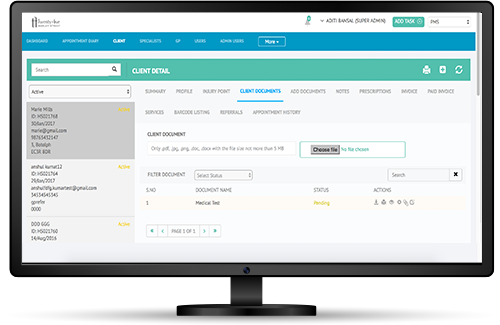
Unthinkable developed a fully web-based practice management system designed to streamline everyday clinic operations. The platform connects key functions like administrative, financial, and clinical functions into one cohesive system, improving workflows for doctors, nurses, and support staff.
The tech team built dedicated modules for managing patient records, enabling smooth doctor-patient interactions, handling billing, and overseeing inventory across all locations, including medicines, supplies, and equipment. The result was a powerful, scalable solution tailored to the needs of modern healthcare practices.
Network architecture and data security
To connect all clinic locations under one secure system, our team built a centralized database management system that allowed seamless data access while keeping patient information strictly confidential. This setup ensured that all records could be managed from a single source without compromising privacy.
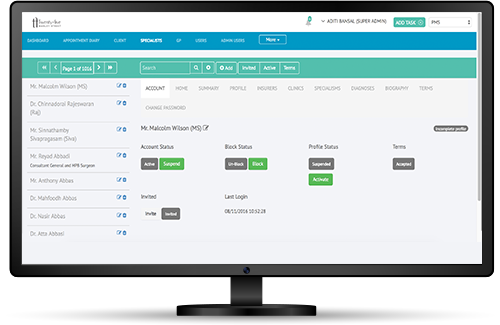
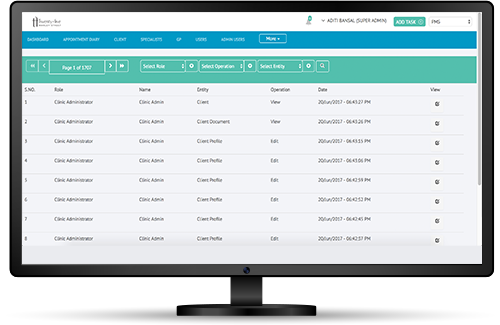
We also developed a patient-facing portal that gave individuals secure access to their medical history and clinical updates. For physicians, we introduced advanced charting tools to simplify documentation and improve care delivery. Throughout the design, development, and testing phases, data protection remained a top priority, with safeguards built into every layer of the system.
Key system modules
Smart appointment scheduling
We built an integrated calendar system that lets patients book appointments with general practitioners and consultants based on real-time availability. It automatically checks for scheduling conflicts and ensures smooth coordination across clinics.
Digital patient records maintenance
The system maintains complete electronic health records, including personal details, contact information, unique patient IDs, and full medical history. This helps doctors deliver consistent, informed care across visits.
Role-based task management
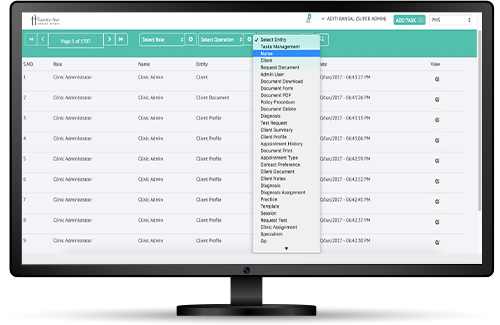
Access to tasks and features is tailored to each user’s role: whether they’re a staff member, GP, or consultant. The system ensures that everyone sees only what’s relevant to their responsibilities, keeping operations secure and organized.
Pathology and imaging integration
We connected the PMS with a Laboratory Information Management System (LIMS) to streamline sample tracking and diagnostic data flow. A two-way communication setup ensures smooth exchange between the PMS and pathology devices, improving accuracy and turnaround time.
Inventory management
A real-time stock tracking module was built to give clinical teams clear visibility into available supplies and upcoming needs. It monitors medicines, equipment, and consumables across all clinic locations, helping staff stay prepared and avoid shortages.
Referral management
Unthinkable added a dedicated referral module that simplifies scheduling between general practitioners and specialists. It allows GPs to refer patients efficiently while keeping care plans aligned across providers, ensuring continuity and better outcomes.
The Impact
Once the Practice Management System was rolled out across multiple clinic sites, the client successfully unified general practitioners, specialists, and internal teams under one connected platform. This setup allowed patients to be directed to the right healthcare provider based on their specific needs, improving care delivery.
The system automated key departments and worked smoothly with existing third-party tools like pathology analyzers, image archiving systems, billing software, and barcode scanners. Clinical staff appreciated the user-friendly interface, which made daily tasks easier and more efficient.
By centralizing operations, the PMS improved coordination across locations, cut down on administrative workload, and enhanced the overall quality of patient care through faster access to information and a more streamlined process.

30+
clinics integrated into unified system
47%
increase in operational efficiency
30%
code reused from previous system
20
man-months of development effort saved