Success Story
About the client

The client is a top-tier hospital based in New York, renowned for its expansive network of 39 multidisciplinary institutes spanning research, education, and clinical care. With a medical staff of over 7,000 physicians ranging from general practitioners to specialized experts, the hospital handles more than 150,000 inpatient admissions and 500,000 emergency department visits each month.
Business Situation
Clinical guidelines advise that the time between the onset of a stroke and intracoronary balloon inflation known as door-to-balloon (D2B) time should not exceed 90 minutes. However, treatment for conditions like stroke, STEMI, and trauma is often delayed due to communication breakdowns between paramedics and hospital teams during the critical door-to-needle window.
The hospital faced several operational challenges. Paramedics in ambulances had to rely on phone calls to update doctors about patient conditions during transport. This process was slow, prone to miscommunication, and didn’t provide real-time visibility into patient status. The cardiology team often received incomplete information, making it difficult to prepare adequately for incoming patients.
To address delays in door-to-balloon time, the client sought a solution that could deliver real-time communication and status updates across all stakeholders involved in emergency cardiac care. Their goal was to enable seamless coordination between paramedics, cardiologists, and hospital teams during critical moments.
In search of a technology partner with deep expertise in healthcare software, the client selected Unthinkable Solutions. Our proven track record in building innovative medical applications, combined with operational insight positioned us as the ideal collaborator.
Their technical requirements included:
Creating a mobile-based system for direct transmission of ECG and patient data from paramedics to hospital teams
Implementing real-time messaging to keep all stakeholders informed during ambulance transit
Integrating GPS tracking for ambulance monitoring and emergency preparedness
Ensuring compliance with HL7 standards for secure and standardized data exchange across healthcare systems
The solution
Our team began by conducting a thorough analysis of the hospital’s existing workflows and pain points. We mapped out the entire patient journey from the moment doctors identified a STEMI case to when the patient reached the catheterization lab. This comprehensive understanding allowed us to design an optimal mobile solution architecture that would seamlessly integrate with the hospital’s existing systems.
We refined the functional requirements and developed a complete product vision with a detailed development roadmap. Our business analysts worked closely with medical staff to ensure the solution would truly address their operational needs while improving patient outcomes
User-centered design approach
Our UI/UX experts applied design thinking techniques to create an intuitive interface that would work flawlessly under high-pressure emergency situations. We developed role-based user stories to ensure each type of user could quickly access the information and functions they needed most.
The interface design prioritized simplicity and speed. In emergency situations, every second counts, so we made sure that critical functions could be accessed with minimal taps and that information was displayed clearly even under stressful conditions.
Fast-tracked development using low-code methodology
Understanding the urgency of the project, we implemented a low-code development approach that reduced the overall development timeline by 50%. What would typically require 3.5 months using conventional development methods was completed in just 1.5 months without sacrificing quality or functionality.
This approach allowed us to focus more time on testing and refinement while still delivering a robust, feature-rich application that met all the hospital’s requirements.
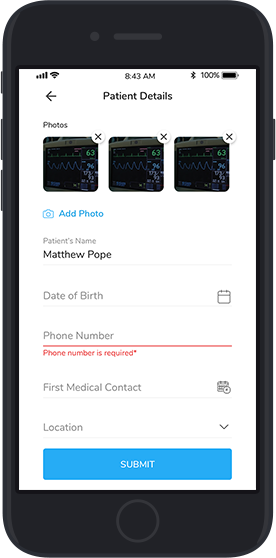
Comprehensive mobile application development
Unthinkable Solutions developed native mobile applications for both Android and iOS platforms, ensuring that all medical personnel could use the system regardless of their device preference. The applications were designed to improve clinical outcomes for patients with STEMI and cardiogenic shock through better communication and coordination.
The application features four distinct user roles, each with specific capabilities tailored to their responsibilities:
Alarm Initiator (Referrer): Field medical personnel including doctors, nurses, and health assistants can quickly capture and transmit ECG images along with detailed patient information to the hospital team. This role enables rapid case initiation with all relevant medical data.
Hospital Team (Acceptor): Cardiology specialists at the hospital receive real-time notifications with patient data and ECG readings. They can review the STEMI case details and update status information for the entire care team, ensuring everyone stays informed about treatment decisions.
Transfer Center Coordinator: This role manages the logistics of patient transport by coordinating ambulance assignments and overseeing case management from initial alert through patient arrival at the hospital.
Emergency Medical Services (EMS): Ambulance personnel can actively participate in group communications while providing continuous updates about patient condition during transport. Their location is tracked in real-time, allowing the hospital team to monitor their progress.
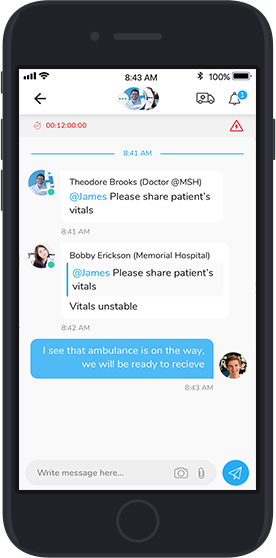
Real-time communication and tracking
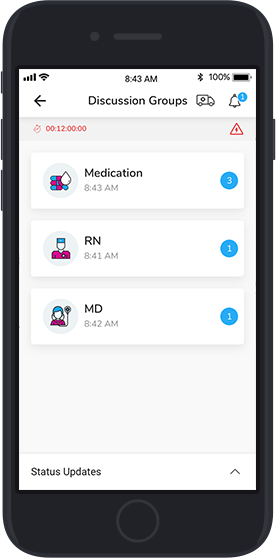
The application creates a unified communication channel where all stakeholders can collaborate simultaneously. Group chat functionality ensures that critical updates reach everyone instantly, eliminating the delays and potential miscommunications that occurred with traditional phone-based coordination.
Live GPS tracking provides the hospital team with real-time visibility into ambulance location and estimated arrival time. This allows them to prepare alert necessary staff and have everything ready the moment the patient arrives.
Comprehensive administrative dashboard in EMS
We developed a fully customized and modular admin panel that integrates seamlessly with the hospital’s existing Emergency Medical Services infrastructure. The dashboard provides administrators with a complete overview of the system, including user management, alarm monitoring, and performance analytics.
Hospital administrators can activate or deactivate users, track alarm status and response times, analyze pre-procedural metrics, and access comprehensive patient dashboards. This administrative capability ensures the system can be managed effectively and provides valuable data for continuous improvement initiatives.
The impact
The mobile application has modified the hospital’s approach to managing STEMI cases by establishing a streamlined, real-time care pathway. Paramedics can instantly transmit patient details and ECG data to the cardiology team, allowing hospital staff to prepare in advance and respond swiftly upon the patient’s arrival.
This enhanced coordination translates into smarter resource utilization. Physicians can promptly assess ECG results and make timely decisions regarding EMS and in-hospital STEMI activations, leading to improved clinical efficiency and better patient outcomes.
The platform is equipped with advanced performance monitoring capabilities that evaluate provider activity against recognized clinical benchmarks. By delivering actionable insights, it enables the hospital to fine-tune workflows, identify areas for improvement, and consistently maintain high standards of patient care.
Above all, the system fosters a unified, collaborative environment. By centralizing patient data and team communications into a single interface, it removes fragmented workflows and ensures that every stakeholder remains informed and aligned throughout the emergency response.

47%
reduction in door-to-balloon time
50%
reduction in app development time
1000+
STEMI patients successfully monitored