Success Story
About the Client

Headquartered in Mountain View, California, AliveCor is a privately owned healthcare technology company. It rethought cardiac care with smart, IoT-enabled devices. Their FDA-approved products allows users to capture clinical-grade EKG (Electrocardiogram) readings directly from their smartphones or tablets, enabling early detection of atrial fibrillation (AF), normal sinus rhythm, and over 28 other abnormalities. Designed for both home use and hospital environments, AliveCor’s devices empower patients and doctors with real-time insights into heart health. The company’s commitment to innovation also earned it recognition as Fast Company’s Most Innovative Company in Artificial Intelligence in 2018.
Business Situation
AliveCor had an existing mobile application that connected with their smart EKG devices, but the platform faced growth and patient-side limitations.
Their legacy app could only detect 5 basic heart abnormalities, which significantly limited its clinical value for comprehensive cardiac monitoring. While clinicians needed more detailed insights to make informed decisions about patient care.
On the other hand, user experience suffered from issues in design patterns and limited functionality. Patients found it difficult to track their health data and the interface didn’t meet modern usability standards.
Their vision was to modernize their mobile platform to deliver deeper cardiac insights and enhance usability. They aimed to create a robust, scalable solution that would give both patients and providers accurate, real-time EKG analytics and a more intuitive interface.
To realize this vision, AliveCor partnered with Unthinkable Solutions, selecting them for their deep expertise in healthcare technology and proven success in building scalable, regulation-compliant medical applications. The goal was to revamp the existing app architecture, which was built on Java and Objective-C, and transition to modern technologies like Kotlin and Swift. This upgrade would not only streamline development but also improve performance, maintainability, and future scalability.
Key technical requirements
Upgrade core technology stack to modern Kotlin and Swift frameworks
Integrate advanced Atrial Fibrillation (AF) detection algorithms to identify 30+ heart abnormalities
Improve the visualization and clarity of 6-lead EKG readings within the mobile interface
Implement comprehensive health tracking beyond EKG data, including blood pressure, medication, and symptoms
Ensure full compliance with FDA and HIPAA standards for medical device software
Create seamless data sharing capabilities for patients and doctors alike
The Solution
Legacy system analysis and code modernization
Unthinkable’s software experts began with a comprehensive audit of AliveCor’s existing codebase to identify technical debt and optimization opportunities. The team systematically addressed performance bottlenecks and upgraded the database architecture from SQLite to Room for improved data management.
The modernization process involved migrating the entire application from legacy Java and Objective-C to contemporary Kotlin (Android) and Swift (iOS) technologies. This upgrade improved app stability, reduced development time for future features, and enhanced overall user experience.
Advanced EKG analysis integration
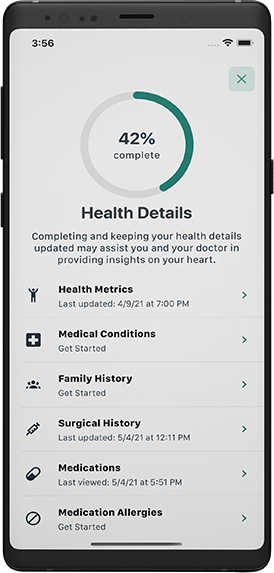
The development team seamlessly embedded a proprietary Atrial Fibrillation (AF) detection algorithm designed by the client to monitor erratic and rapid heartbeats caused by unusual electrical signals in heart’s upper chambers into the app’s core functionality. This enhancement empowered the app to interpret 6-lead EKG signals and identify more than 30 distinct cardiac irregularities.
Leveraging data streamed from smart EKG-enabled devices, the app now delivers real-time insights into conditions such as normal sinus rhythm, bradycardia, tachycardia, and many others, significantly expanding its diagnostic capabilities.
Comprehensive health monitoring platform
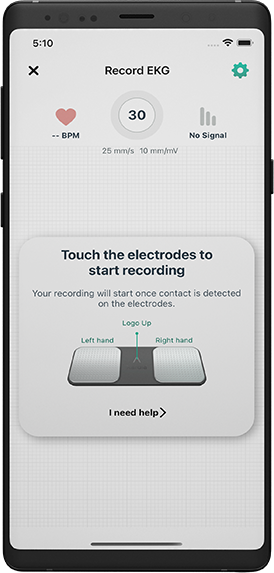
The app’s capabilities were expanded beyond EKG monitoring to create a complete health management platform. Users can now track multiple vital signs including blood pressure, blood sugar levels, cholesterol, weight, and medication schedules.
The platform supports both manual data entry and automatic synchronization with popular wearable devices like Apple Watch and Wear OS by Google. This integration provides patients with a unified view of their health metrics at one convenient location.
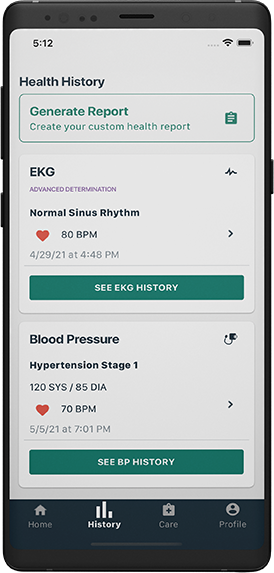
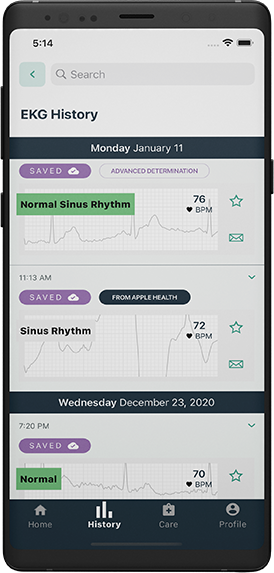
Making data visualization intuitive
The team redesigned the EKG visualization interface to improve the clarity and readability of EKG readings. The new interface presents complex cardiac data in an intuitive format that both patients and healthcare professionals can easily understand.
Users can now generate comprehensive PDF reports of their EKG recordings, complete with analysis results and historical trends. These reports can be easily shared with family members, caregivers, or medical professionals for collaborative care management.
Medication management features
The Medications tab gives users a straightforward way to create a personal drug list and receive a daily push reminder to log their doses. When tapped, the alert opens a simple check-box interface that allows multiple entries per day. Allowing users to view their taken or missed doses within their personal insights graph.
The Impact
With an advanced remote patient monitoring platform that significantly boosts both technical accuracy and clinical utility, AliveCor now delivers 98% sensitivity and 97% specificity in identifying atrial fibrillation, bradycardia, and tachycardia like heart conditions, offering highly reliable insights for prompt medical decisions.
With over 80 million ECGs recorded, the platform has earned widespread trust among patients and healthcare providers. It now detects more than 30 heart-related abnormalities, evolving from a simple EKG tool into a full-scale cardiac care solution.
Beyond diagnostics, the app enhances patient engagement through features like medication reminders, health diaries, and secure data sharing. While clinicians benefit from detailed reports and improved data visualization, enabling more informed and efficient remote care.

80 million+
ECGs recorded
98%
sensitivity and 97% specificity for detecting heart problems
30+
heart abnormalities detectable now