Success Story
About the Client

The client is a Switzerland-based life sciences company serving pharmaceutical, biotech, and medtech organizations. It provides structured research updates and periodic newsletters by systematically collecting and validating scientific literature. The team reviews peer-reviewed papers, preprints, and clinical studies, distilling them into clear, evidence-based insights. By combining multiple sources, the company helps clients track research, competitors, and market developments efficiently.
Country:
Switzerland
Industry:
Healthcare
Business Situation and Requirements
Life sciences researchers use platforms like PubMed, PubMed Central, ScienceDirect, MDPI, bioRxiv, and arXiv for pharmaceutical research updates. First, they run broad searches, then screen results for relevance and accuracy. However, many studies appear on multiple platforms, creating duplicates that must be manually removed. Additionally, large result sets need refinement, and database limits often split searches. Consequently, the process is repetitive and time-consuming.
As a result, recurring briefs and newsletters can take up to 30 hours. To improve efficiency, the client partnered with Unthinkable to build an AI-powered assistant that streamlines aggregation, validation, and report generation in one interface, while researchers retain full review control.
Their key requirements included:
Create a unified platform that pulls data from multiple databases and supports both natural language and structured searches.
Automatically detect and remove duplicates using DOI and publication metadata.
Use AI to validate and score relevance, while letting researchers review and adjust selections.
Automate repetitive tasks like filtering, categorizing, summarizing, and refining large result sets.
Give researchers control to update metadata, manage article status, and add records via DOI.
Produce structured outputs, PDFs, reference lists, and newsletters, while tracking updates across reporting cycles.
The Solution
The client partnered with our team to build a tailored AI-assisted research platform for clinical and pharmaceutical workflows. It uses Python, FastAPI, Next.js, MongoDB, AWS, LangChain, OpenAI, and Playwright.
Additionally, the platform aggregates sources like PubMed and ScienceDirect into one interface. It removes duplicates, scores relevance, categorizes themes, and generates summaries, while ensuring consistent human oversight throughout.
Some of the key features included:
Unified Multi-Database Integration
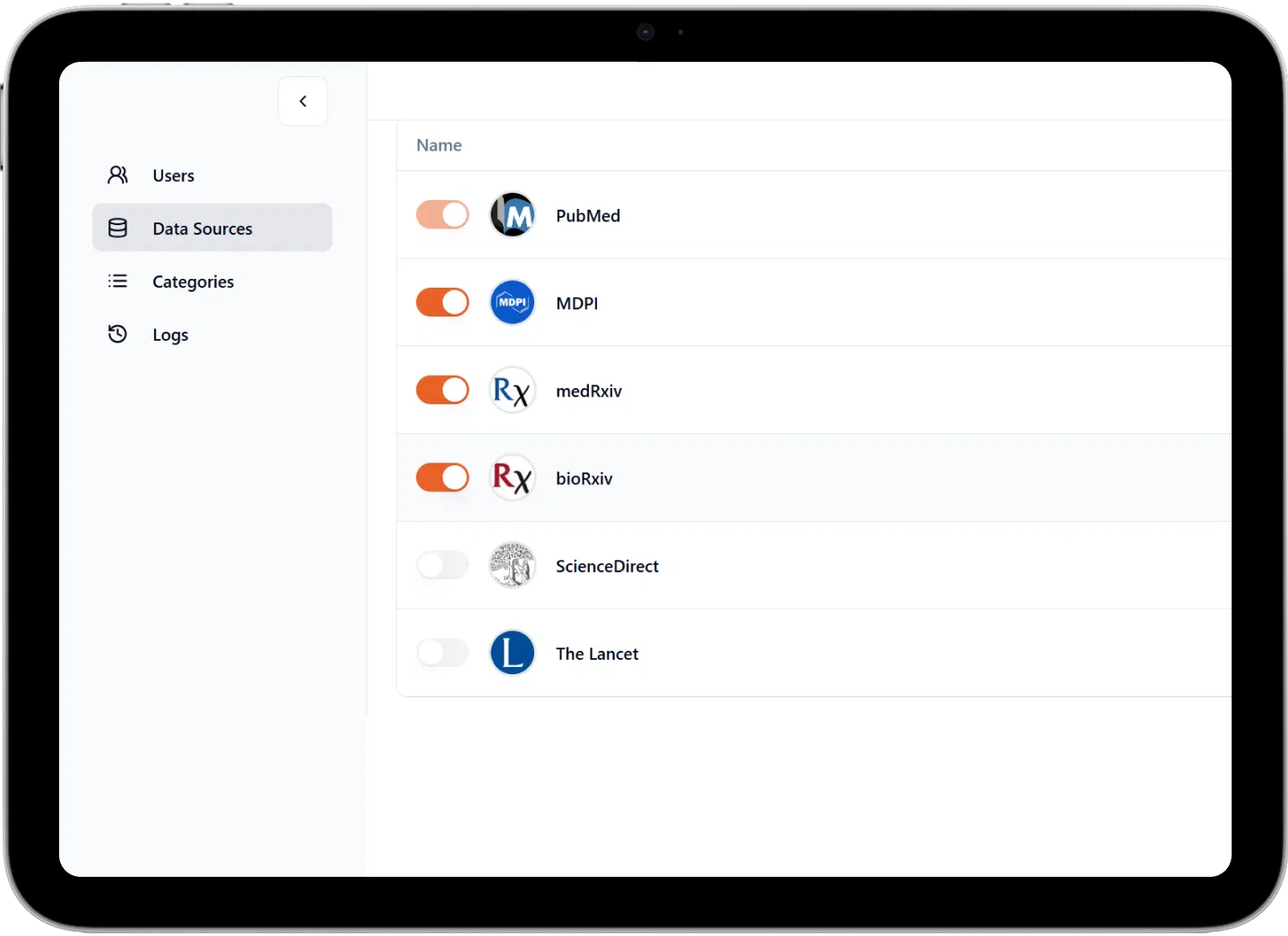
- Gather references from top databases like PubMed, PMC, ScienceDirect, MDPI, bioRxiv, arXiv, and MetaArchive, through a single ingestion layer.
- To tandardize all metadata and map each record to its original source for accuracy and traceability.
- Researchers can run seamless, consolidated searches, although full-text articles are not stored on the platform.
Duplicate Detection & AI-Driven Relevance Rankin
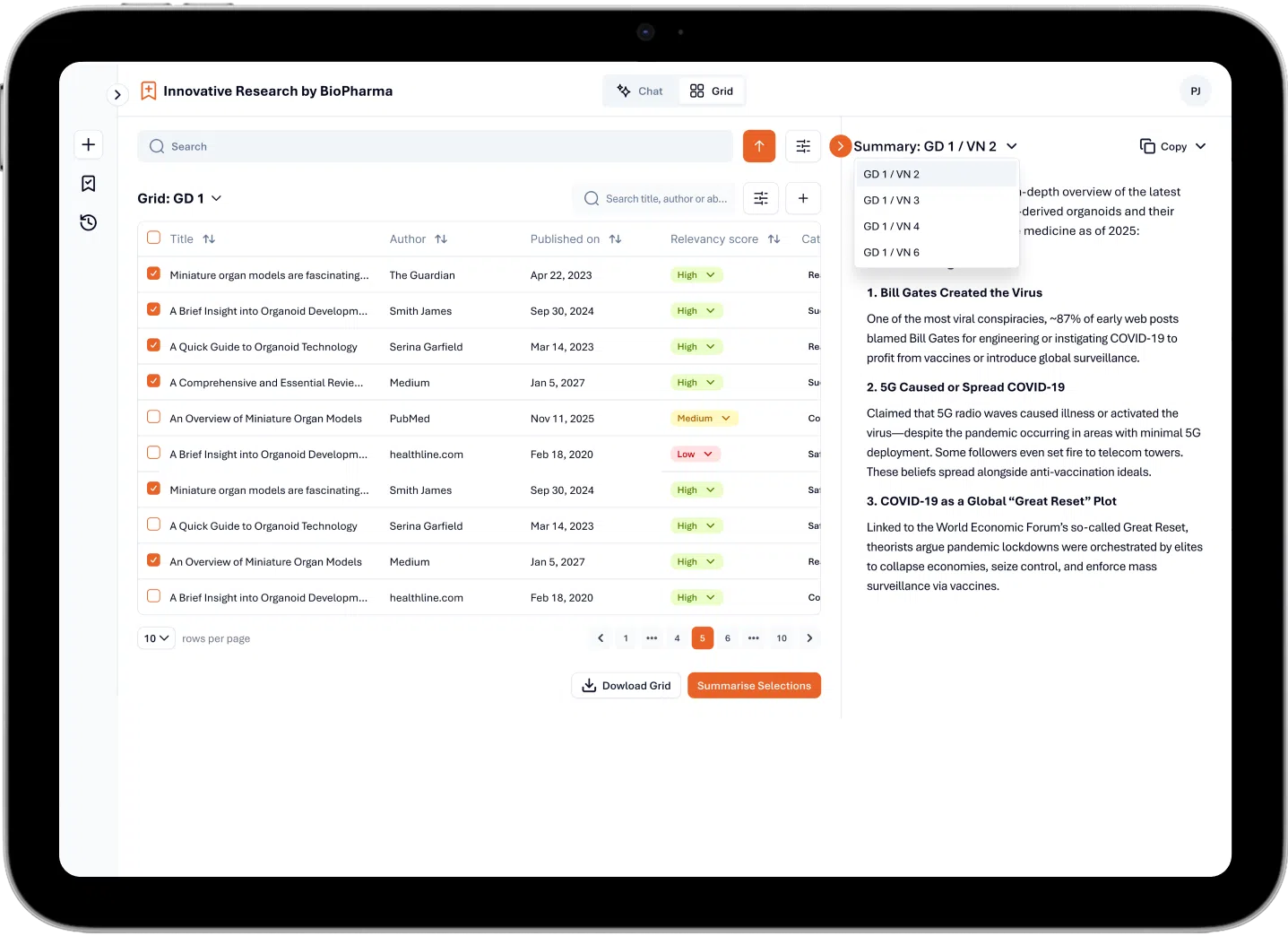
- Records from multiple sources are carefully matched and consolidated using DOI, title, author, and publication date, thereby removing duplicates before review.
- Each article is evaluated for relevance using LLM-powered analysis of abstracts.
- Studies are classified as High, Medium, or Low relevance, highlighting key research while reducing informational noise.
Dual Research Views
- Grid View displays article data, metadata, filters, and relevance tags. Additionally, objectives and conclusions can be extracted on demand, enabling precise manual validation.
- AI Assisted View uses LLMs to generate concise summaries. Consequently, key objectives, findings, and conclusions are highlighted, speeding up analysis while maintaining expert oversight.
Thematic Classification & Update Monitoring
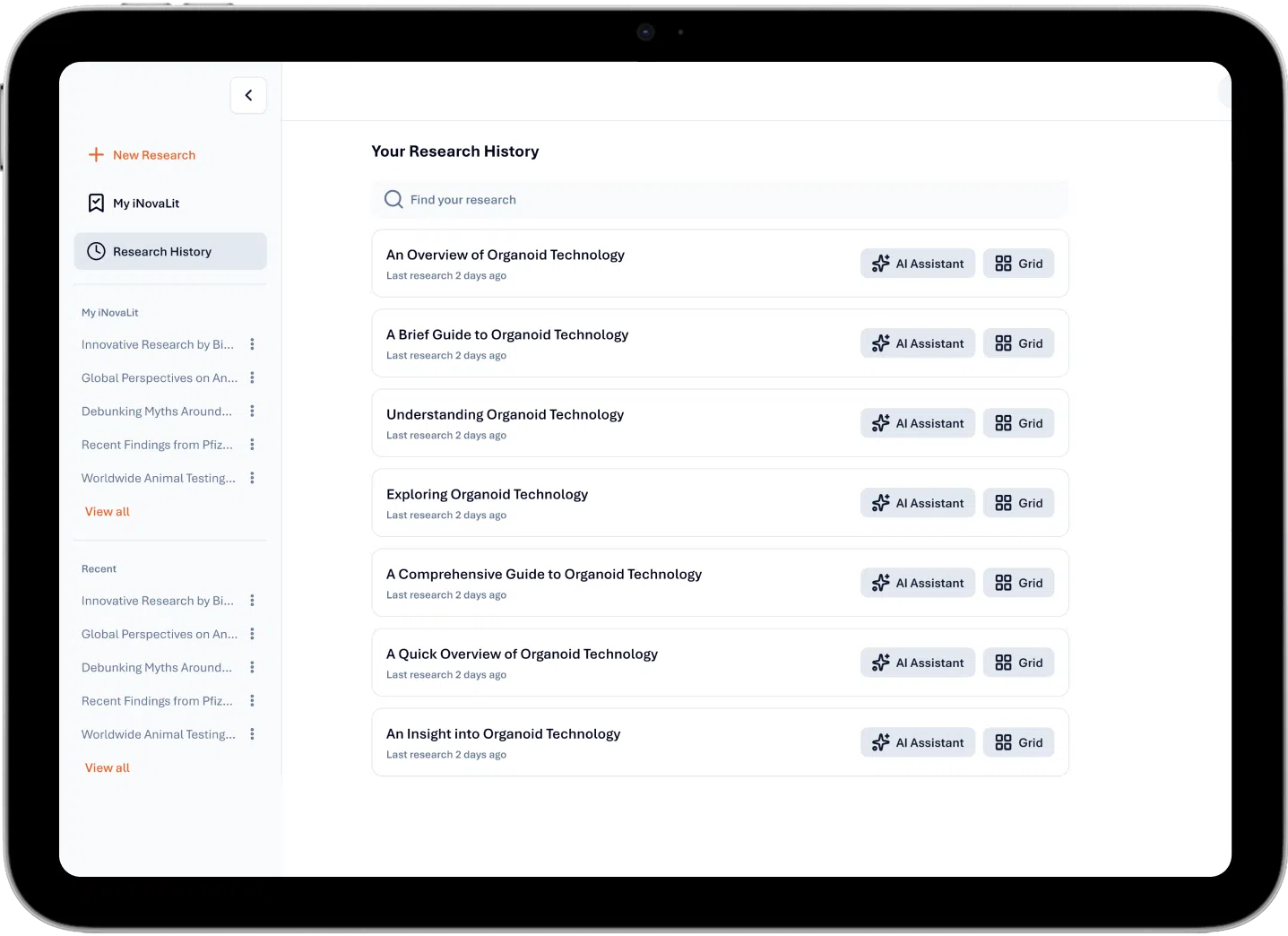
- Articles are automatically grouped into research themes, organizing literature by topic.
- As a result, downstream reporting becomes simpler and more structured.
- Pre-published records are monitored for status changes and revisions. When updates occur, the system highlights them and directs changes to the relevant sections in recurring outputs, such as newsletters, thereby avoiding duplication.
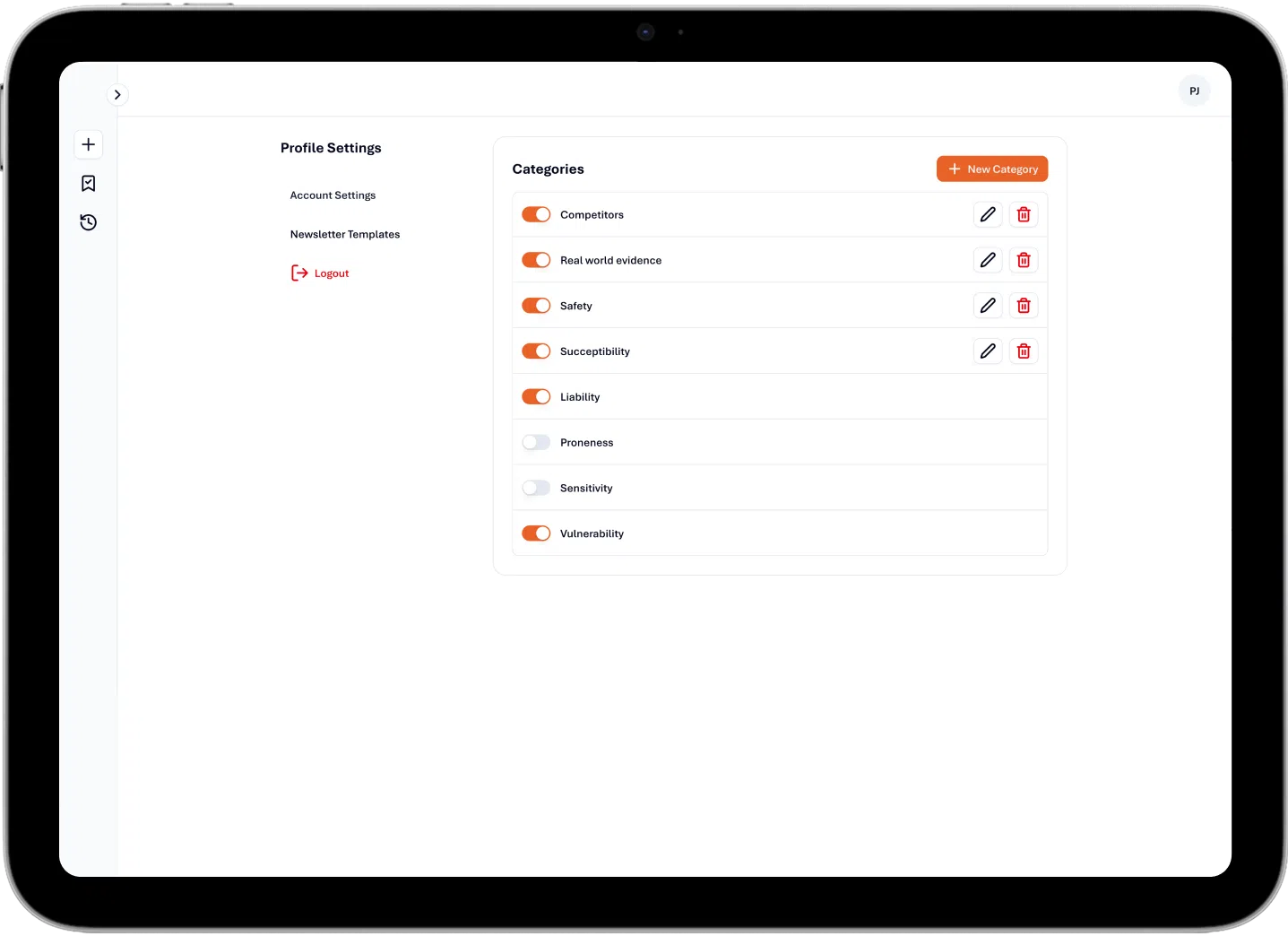
Unified Dual Mode Search
- The platform handles search requests through a single interface that supports both natural language and structured PubMed-style queries.
- Users can apply filters and refinement prompts before running searches, enabling flexible and precise retrieval for different research workflows.
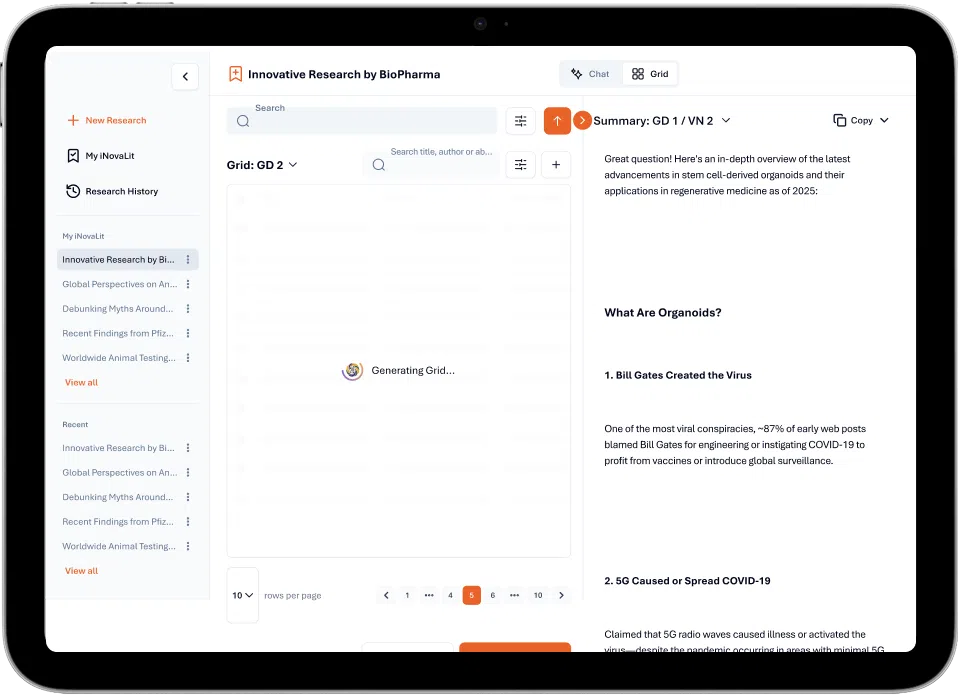
Manual DOI Entry & Article Inclusion
- Publications not captured automatically can be added manually using DOI references.
- The system retrieves and attaches available metadata, ensuring traceability and seamless integration of important studies into the dataset.
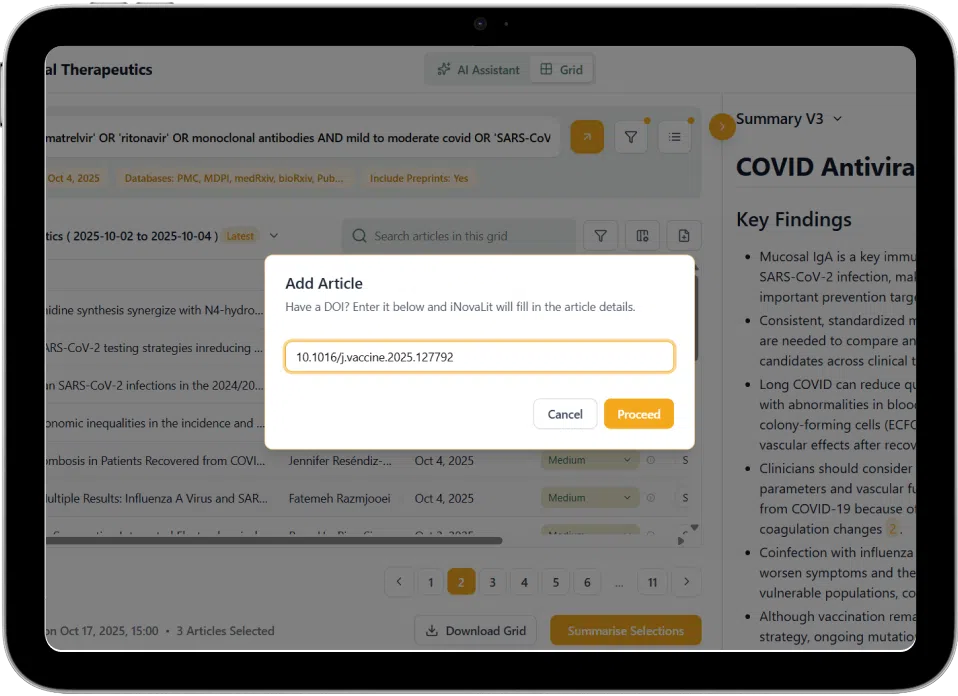
AI-Powered Structured Summaries
- Selected and validated articles are processed using AI-assisted summarization to produce concise, reference-linked briefs.
- Summaries keep structured formatting and source attribution, while allowing analysts to adjust article selections before finalizing the output.
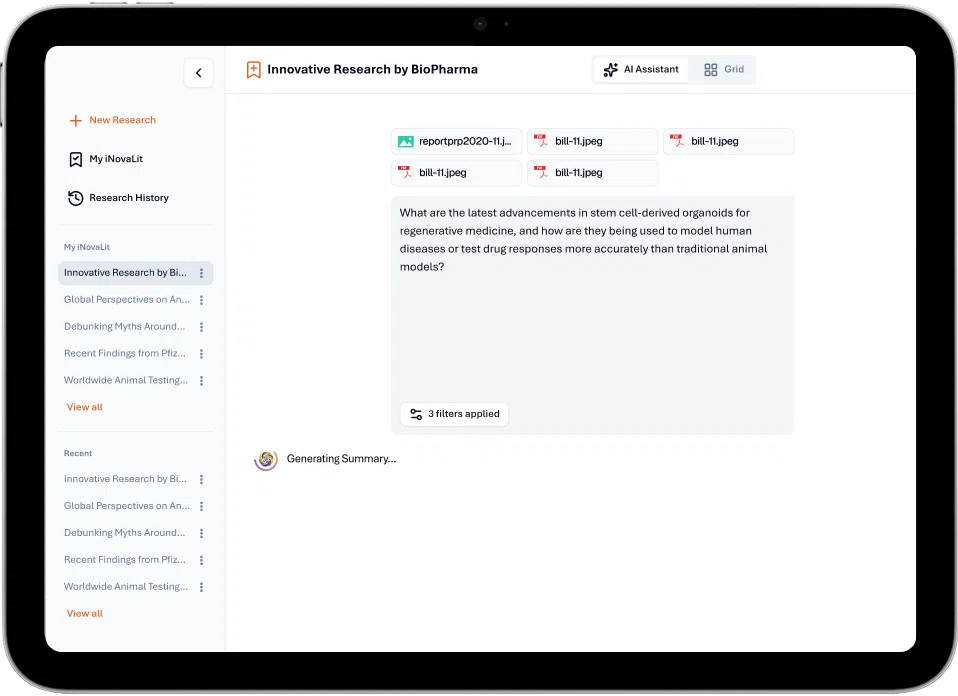
Client Ready Exportable Outputs
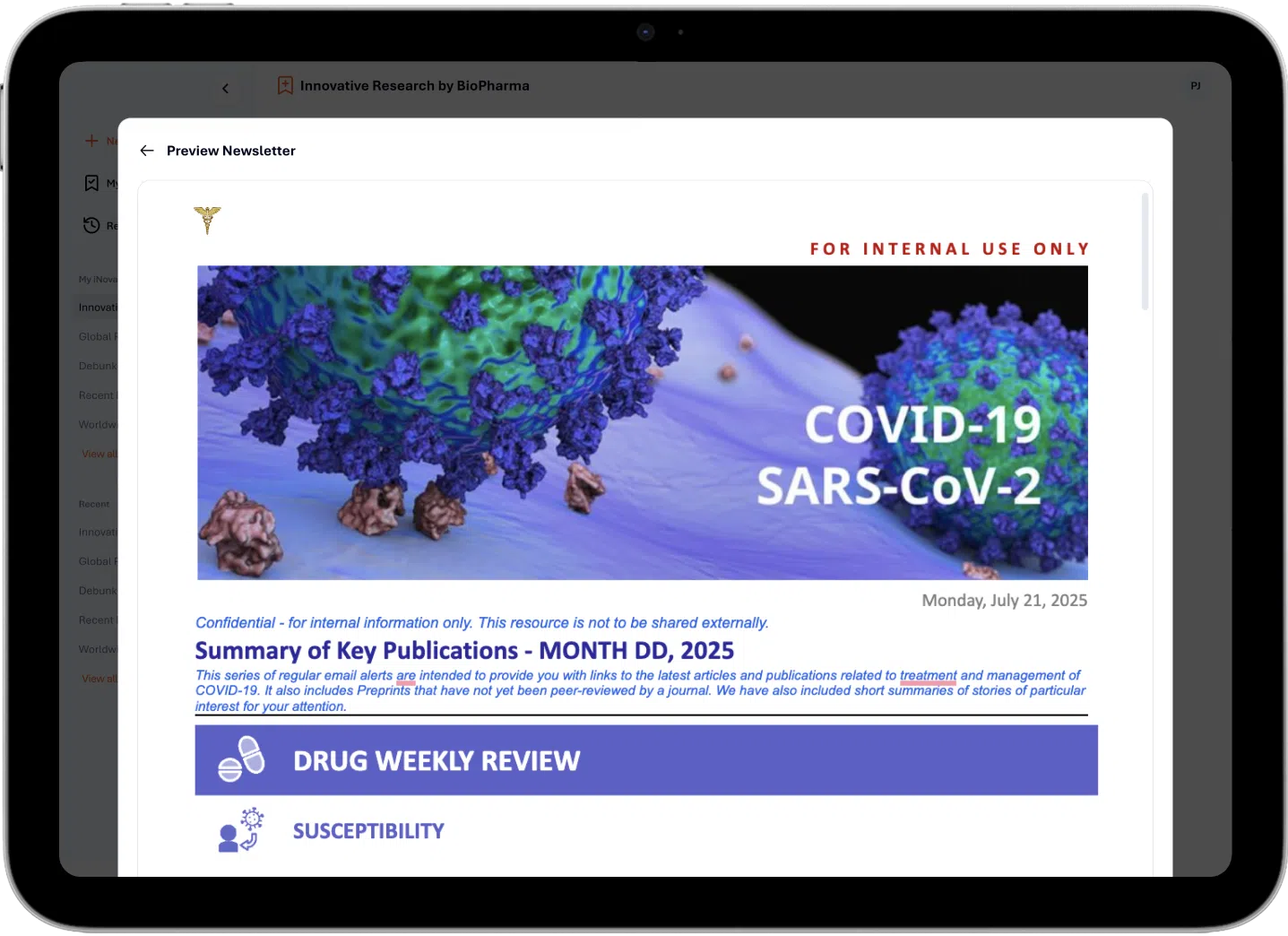
- Reviewed results can be exported as consolidated grids, structured reports, or newsletters.
- Exports retain citations, relevance tags, categories, and update notifications, providing consistent, ready-to-use deliverables without extra formatting.
The Impact
The AI-assisted platform transformed the client’s literature review by automating aggregation, deduplication, validation, and summarization. The workflows dropped from 20–30 hours to 4–8 hours, boosting productivity significantly.
By consolidating references from multiple databases into a single interface, repetitive searches were eliminated. Automated scoring and duplicate detection reduced manual screening, while structured outputs like summaries, PDFs, and newsletters streamlined reporting without sacrificing researcher oversight or analytical control.