Success Story
About the Client

The client is a leading HRMS solutions provider based in the UAE, with a presence across the Middle East, including Kuwait, Saudi Arabia, Bahrain, and Qatar. Trusted by over 1,000 clients worldwide, the company helps HR teams reduce workload and simplify organizational processes with its comprehensive HRMS platform.
Business Situation and Requirements
The client had developed a white-label HRMS platform that supported multiple business needs, but scaling it for new customers required hands-on effort. Each onboarding involved code-level configurations and system adjustments, and even small updates needed full deployments.
This made the onboarding process slow and time-intensive, especially as the platform and user base continued to grow. The client also worked closely with their existing development partner for ongoing changes and maintenance, but the partner was not able to simplify the process or introduce improvements that could support faster scaling.
The client aimed to move towards a more flexible and scalable setup that could support faster onboarding and easier customization. They wanted to reduce dependency on a single vendor and create a system where code, data, and knowledge could be managed more independently. At the same time, ensuring a smooth and secure transition to a new development environment was a key priority.
Their key requirements were:
Improve Scalability: Replace the manual, time-consuming processes to allow the platform to scale efficiently and support growing operations.
Reduce Vendor Dependency: Minimize reliance on the existing development partner for code, assets, and documentation.
Secure Knowledge Transfer: Safely migrate the entire codebase, data, assets, and documentation to a new platform without disrupting operations.
Enhance Customization: Enable dynamic and flexible code modifications to quickly accommodate new customer requirements.
Speed Up Development: Streamline deployment processes to reduce time and resource consumption for updates and onboarding.
Ensure Reliability: Implement a stable, secure, and highly maintainable platform to support ongoing HRMS operations.
Solution
Our team began by understanding the client’s vision and challenges, helping them break free from vendor lock-in. We gathered complete product knowledge, laying the foundation for a smooth transition and successful development project.
To streamline manual configuration and deployment, our team automated tasks using a CI/CD pipeline. Leveraging low-code/no-code development with .NET backend and ReactJS frontend, we built a modular HRMS platform with rapid prototyping, iterative improvements, and continuous feedback for faster onboarding and easy customizations.
Some of the key highlights of the project included:
Super Admin Dashboard Features
The Super Admin Dashboard comes with several built-in features that allow administrators to build screens, menus, forms, and manage the platform efficiently. Key solutions developed for the client include:
Object Builder
- Create and customize elements such as forms, widgets, and data fields.
- Add objects under defined modules, clone existing objects, or create new ones from scratch.
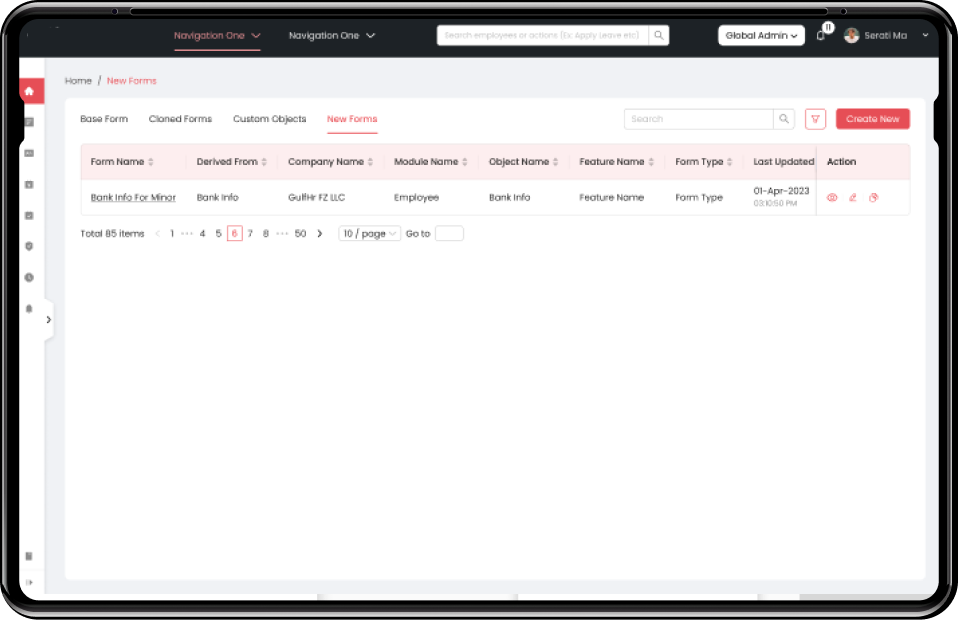
Dynamic Form Creation
- Design highly customizable forms with multiple field types like feature, object, module, and company fields.
- Adapt forms to meet specific business requirements and data collection needs.
Screen Builder
- Design screens with a high degree of customization using pre-built widgets, templates, and UI components.
- Drag and drop buttons, text fields, images, and forms onto the screen.
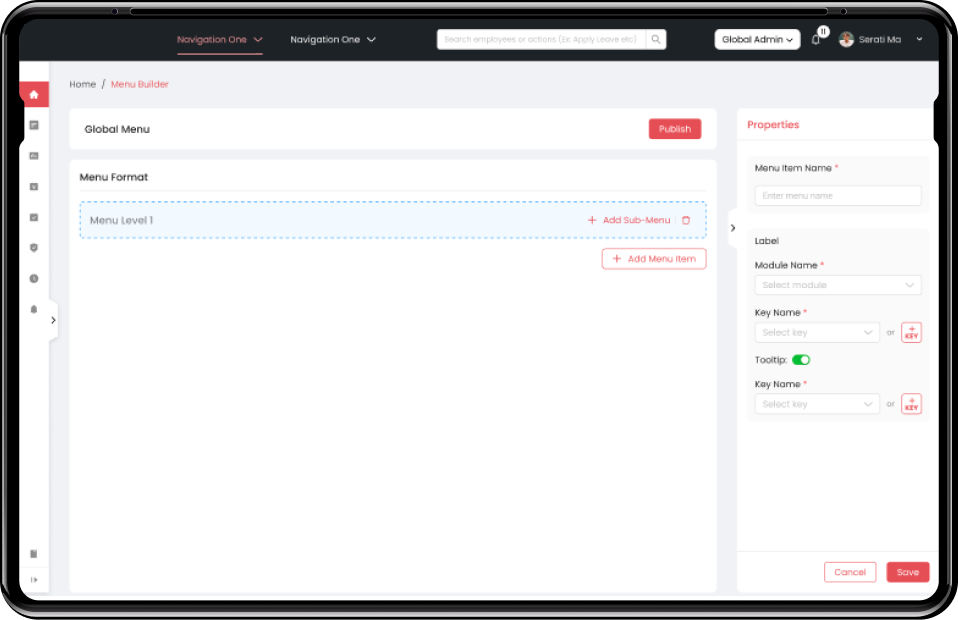
Menu Builder
- Design and structure menu items for the platform.
- Add, reorder, or prioritize functions to ensure a seamless user experience.
License Management
- Define licensing plans and choose which features to enable or disable for different user groups.
User Management
- Set up user roles, access levels, and permissions based on organizational hierarchy.
App Localization
- Adapt application elements to different regional languages and formats for global users.
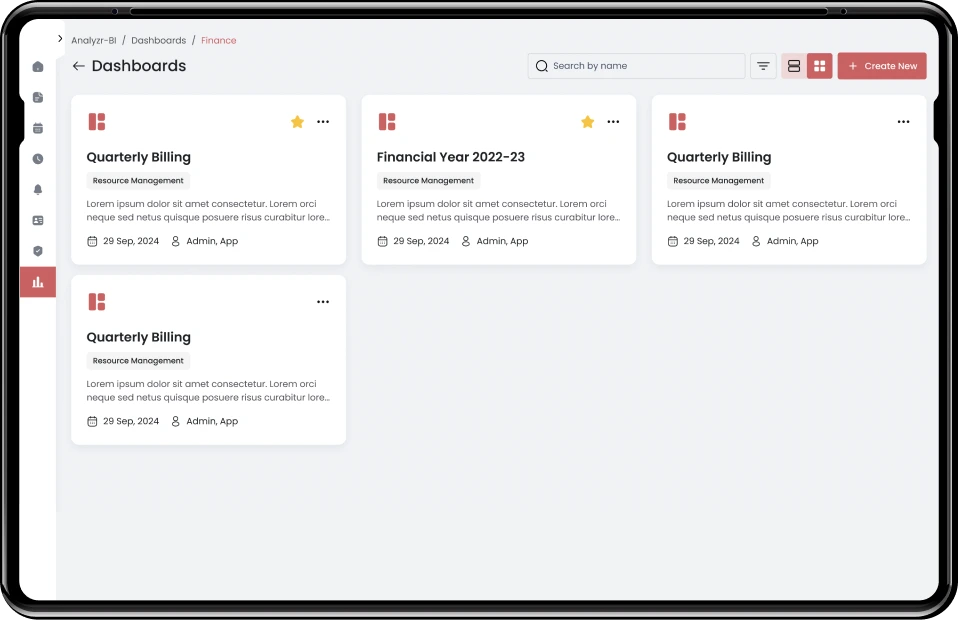
Reporting Tool
Dynamic Report Builder
- Create tailored reports by selecting fields, applying filters, and choosing data sources.
- Gather real-time insights into key performance indicators (KPIs).
Selection from a Pool of Charts
- Choose from pie charts, bar graphs, line charts, and more.
- Present data visually based on audience and analytical requirements.
User and Role Management
- Define roles, access levels, and permissions to ensure data security.
- Control report access based on user responsibilities.
Layout Configuration
- Customize dashboards by arranging multiple widgets in a single view.
- Create organized and visually appealing interfaces to display key insights.
Tailored HRMS Features for Employee and Process Management
Organizations can handpick specific modules and features for their custom HRMS platform to ensure smoother operations. Key modules include:
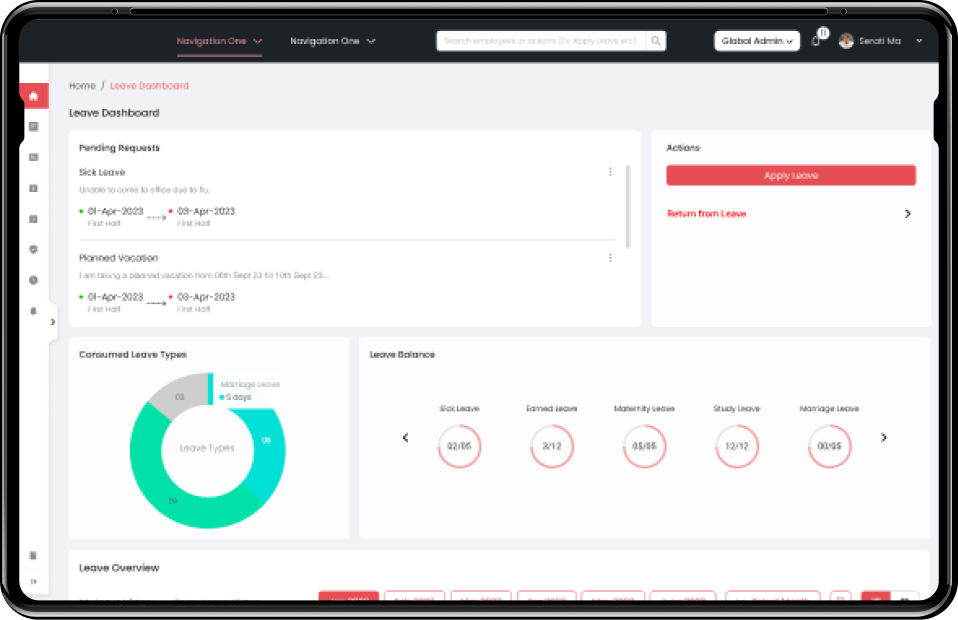
Leave Management
- Manage employee leaves and policies, including earned, sick, unpaid, and annual leaves.
- Define leave rules, approval workflows, and integrate with payroll tools.
- Generate reports in preferred formats for tracking and analysis.
Employee Management
- Maintain detailed employee records, including job history, education, compensation, insurance, and travel details.
- Streamline core HR functions and processes efficiently.
Payroll Management
- Flexible and robust payroll solution for comprehensive payroll calculations.
Attendance Dashboard
- Monitor employee clock-in/out times, absences, and overtime.
- Identify trends and patterns to improve productivity.
Email Templates
- Automate employee communications and notifications.
- Send bulk messages for birthdays, anniversaries, leave approvals/rejections, holidays, and more.
Holiday Calendar
- Integrate holiday calendars for better leave management.
- Schedule special dates and holidays as per business needs.
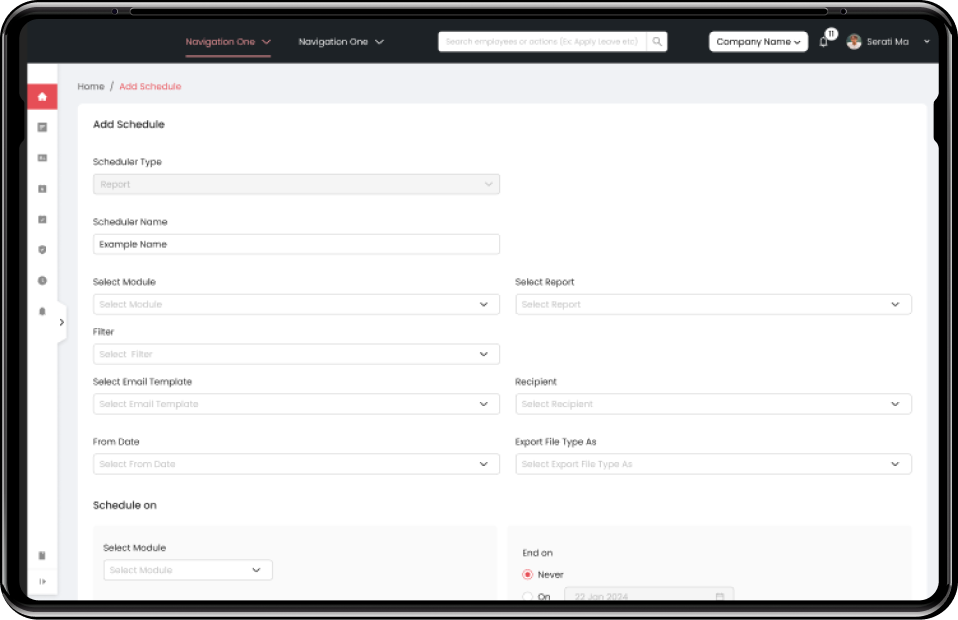
Schedule Engine
- Automate notifications and report generation daily, weekly, monthly, or yearly.
- Customize reports with filters like modules, email templates, and file types.
- Send deadline reminders, system alerts, and other notifications on pre-set timelines.
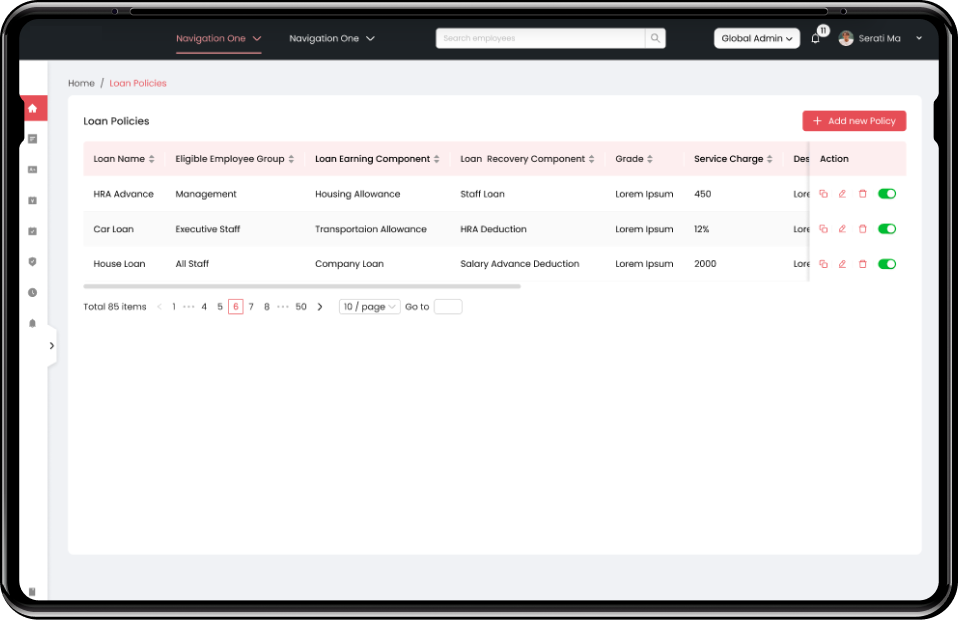
Loan Management
- Track and manage employee loans efficiently.
- Features include recovery tracking, employee grading, and service charge management.
Flight Ticket Module
- Manage business-related air travel for employees.
- Track travel details, ticket cost, allowances, add-on travelers, and plan operations seamlessly.
Education Policy
- Define employee education benefits and eligibility.
- Set covered expenses and payment frequency for local and foreign employees.
Impact
Our team at Unthinkable helped the client overcome vendor lock-in, streamline customer onboarding, and achieve faster time-to-market. The solution significantly reduced onboarding time and allowed the client to focus on market expansion.
With features like dynamic form creation and real-time platform customization, the client could create modules, forms, and screens in just a few clicks. The project improved speed, scalability, and efficiency, establishing the client as a top choice for HRMS solutions.
Impressed by the results, the client later engaged Unthinkable to integrate AI-based features for even greater capabilities.