Success Story
About the Client

The client is a leading provider of stock management software for the automobile industry in the UK. Their solutions are used by Original Equipment Manufacturers (OEMs), retailers, and e-commerce platforms that sell both new and used vehicles. The company also offers software for inventory management, data enrichment, marketing, insurance management, and retail operations. These solutions help automotive businesses manage their inventory, streamline operations, and sell vehicles more efficiently.
Business Situation and Requirements
The client had a legacy Vehicle Inventory Management System (VIMS) that let Original Equipment Manufacturers (OEMs) view, edit, and manage vehicle inventory. The platform was leased to different entities under contracts. However, it had some limitations. It could only support one client’s workflow at a time. It also stored data only for used cars with UK registration numbers, not new vehicles with just a chassis or VIN.
Because of these limitations, the client wanted to modernize the VIMS. The new system needed to reflect real-world automobile industry processes and support multiple clients at once. The client chose Unthinkable to modernize their legacy platform due to our expertise in transforming outdated systems into scalable, cloud-ready solutions.
Their key requirements included:
Update and modernize the legacy Vehicle Inventory Management System (VIMS) with secure data migration, minimal downtime, and protection of sensitive information.
Design a scalable, multi-user system that can grow and adapt to changing business needs.
Redesign the UI/UX to provide an intuitive and user-friendly experience.
Build a multi-nodal platform that supports multiple clients and different user roles.
Enable tracking of both new (unregistered) and used vehicles.
Integrate modules for inventory, images, users, and operations management.
Add mapping tools and a clear, reliable interface for easy inventory management.
Solution
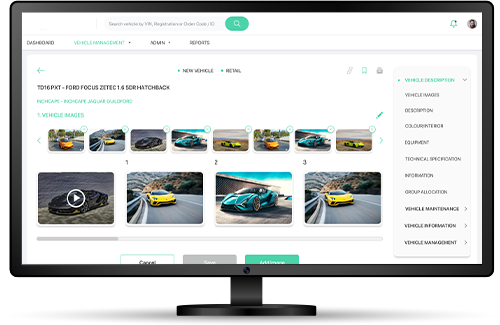
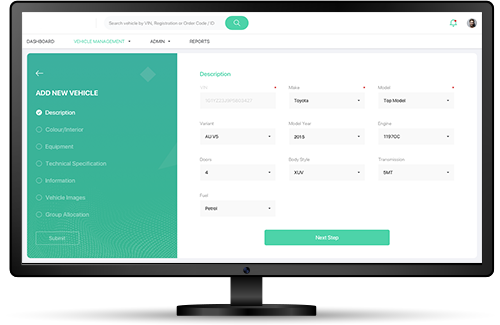
To modernize the legacy Vehicle Inventory Management System (VIMS), our team built a scalable, multi-client platform that mirrors real-world vehicle workflows. We built a user hierarchy for OEMs, groups, and sites, with rules to prevent conflicts and control access. The system now tracks both new and used vehicles, supports searches by VIN, VRN, or Order ID, and monitors vehicles across different readiness stages.
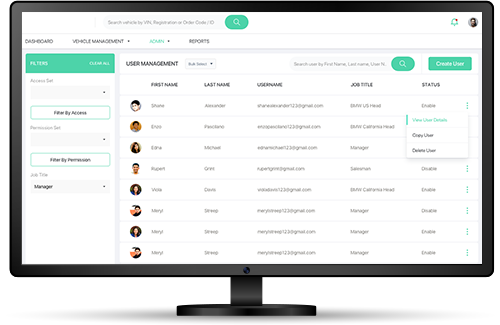
We enhanced image management with Azure Blob storage for bulk uploads and linking. The UI was improved with Blazor WebAssembly for a seamless experience. Hybrid cloud hosting allows easy scaling and simplified client identity management.
Some of the key features in the legacy platform upgrade included:
Intra-Linked User Hierarchy
- Created a hierarchy for OEMs, groups, and sites.
- Mirrored the real-world vehicle inventory management workflow.
- Formulated new business rules to prevent marketing conflicts across multiple brands at a single site.
- Directed user access to the correct brand to avoid access conflicts.
Enhanced Vehicle Search and Tracking
- The previous system allowed searches only by VIN or Vehicle Registration Number (VRN).
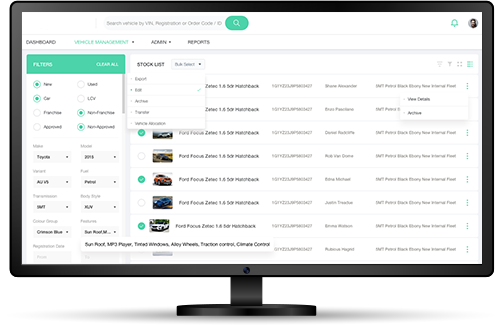
- Modernized VIMS supports searches using VIN, VRN, or Order ID.
- Enables tracking of vehicles across various readiness stages.
Improved Image Management
- Created a new image library using Azure Blob storage.
- Allows bulk upload of vehicle images.
- Images can be linked to vehicles later, making management easier.
Modern UI with Blazor WebAssembly
- Used Blazor WebAssembly for seamless code sharing between back-end and UI.
- Reduced time-to-market with a faster, consistent UI experience.
Agile Development and Hybrid Cloud Hosting
- Adopted Agile methodology for faster and more productive development.
- Hosted web services on a hybrid cloud for flexibility.
- Simplified identity management for multiple clients.
- Future scaling for additional clients is easy and cost-effective.
Impact
The OEMs, groups, and other automotive entities using the client’s VIMS now benefit from a complete intra-user hierarchy. Multiple inventory workflows can run at the same time, making operations smoother and more efficient.
The web-based VIMS is flexible and can move to other platforms if needed. Within a week of launch, the client onboarded two new clients with different workflows, allowing both to manage their inventories seamlessly on the same system.