Oct 28, 2026
AI Chatbots in eCommerce: 10 Use Cases & Examples (2026)
Online shoppers often need help choosing the right product, comparing options, checking delivery details, or resolving an issue before placing an order. AI chatbots can answer these questions through conversation, helping customers make decisions without searching through multiple pages or waiting for customer support.
The impact on shopping decisions is reflected in the 2026 State of AI in Retail report. Among shoppers who used AI for shopping, 66% purchased a product during a recent AI-assisted shopping experience, and 80% of those buyers purchased a product recommended by AI. Retailers are also testing AI chat on their own platforms. In May 2026, Thailand’s Big C reported that its AI shopping assistant pilot contributed to an estimated 5-10% increase in basket size, as shoppers discovered more complementary products.
These findings highlight why retailers are exploring AI chatbots across product discovery, customer support, checkout, and post-purchase service.
Key Takeaways
- AI chatbots for eCommerce improve product discovery, personalized recommendations, and online shopping.
- eCommerce chatbots automate customer support, checkout assistance, order tracking, returns, and refunds.
- Conversational AI in eCommerce enables upselling, cross-selling, and abandoned cart recovery.
- AI-powered chatbots help improve customer experience, support efficiency, sales, and customer retention.
- Successful chatbot automation in eCommerce requires reliable data, system integration, and continuous optimization.
10 AI-Powered Chatbot Use Cases in eCommerce
AI-powered chatbots in eCommerce support customers at different stages of the shopping journey, from finding the right product to tracking an order or requesting a return. By using customer queries, product catalogue data, and order information, they can provide relevant answers and guide shoppers toward the next step.
The most useful applications depend on where customers need help and what the business wants to improve.
Here are 10 practical AI chatbot use cases in eCommerce along with how each can support customer experience and business performance:
1. Personalized Product Recommendations Based on Shopping Intent
Online shoppers often have to browse through hundreds of products before finding something that fits their preferences, budget, or specific needs. Generic recommendations may not be useful when customers are looking for something more specific, such as skincare for sensitive skin, running shoes for narrow feet, or gifts for a particular age group.
A personalized shopping experience helps customers narrow down their options without spending too much time searching.
How AI Chatbot Works Here
An AI shopping assistant uses conversational AI to understand customer preferences, budgets, and shopping activity to suggest relevant products. Shoppers can refine their needs, explore alternatives, and find options within their budget.
Unlike basic rule-based suggestions, chatbots for personalized shopping use customer intent and product data to provide more relevant recommendations, helping shoppers find suitable products faster.
Key Benefits
- Helps shoppers find suitable products quickly.
- Matches recommendations with customer preferences and budgets.
- Reduces the effort needed to browse large catalogues.
- Guides interested shoppers toward relevant products.
- Helps customers discover products they may have otherwise missed.
Real-world example: Unthinkable developed an AI-enabled shopping assistant for a US-based eCommerce store that helps shoppers find outfits through image-based search and personalized style recommendations. The platform also includes virtual try-ons to help customers evaluate outfits before buying.
It recorded 15,000+ products sold through image-based searches, 40,500+ virtual try-ons, and a 40% increase in engagement rates. These results show how personalized product discovery can make online shopping more engaging and help customers find relevant products.
Under the hood: AI shopping assistants typically use a hybrid recommender. Collaborative filtering learns from what similar shoppers bought. Content-based models compare products through vector embeddings of attributes, descriptions, and images. A language model then re-ranks the results against the shopper’s stated need (“sensitive skin”, “under $25”). Session signals such as clicks, dwell time, and cart adds help with first-time visitors who have no purchase history.
2. Conversational Product Discovery for Better Search Results
Traditional eCommerce search often struggles with queries that describe a need rather than a specific product name. A shopper searching for “comfortable shoes for walking all day” may get broad results that are difficult to narrow down. This can make product discovery frustrating, especially when a store has a large catalogue.
How AI Chatbot Works Here
An AI chatbot for product discovery lets customers describe what they need in everyday language. Using natural language processing (NLP), it interprets the query and suggests relevant products based on details such as use, price, size, and features. Shoppers can ask follow-up questions to narrow the results without starting a new search.
AI can also improve how shoppers find products by interpreting search intent and preferences. Explore how AI helps personalize shopping journeys through intelligent search and product recommendations.
Key Benefits
- Helps shoppers find relevant items with fewer searches.
- Matches products to customer needs and context.
- Allows shoppers to refine results through follow-up questions.
- Makes it easier for customers to explore suitable options.
- Helps shoppers move from product search to purchase.
Real-World Example
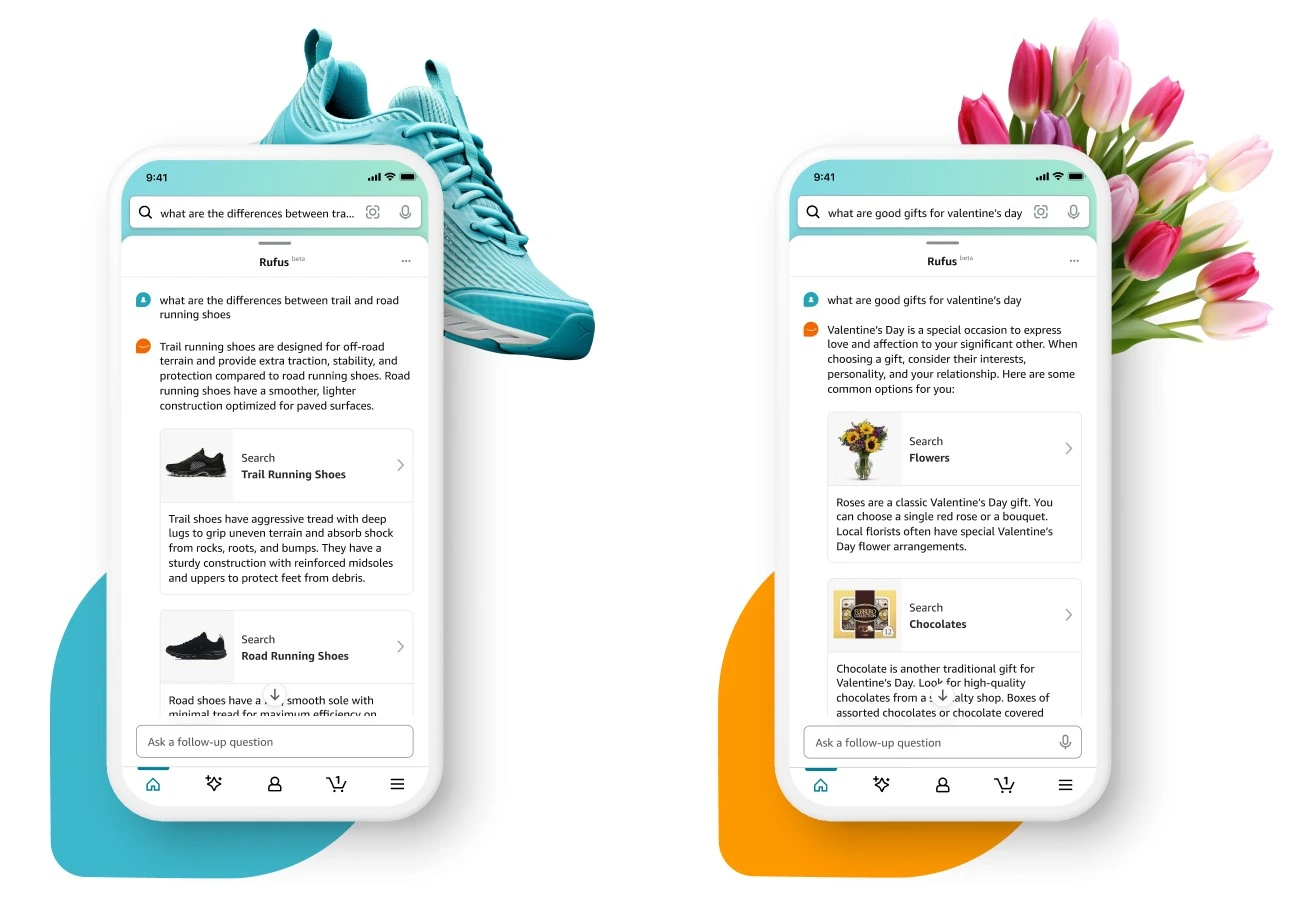
Amazon’s AI shopping assistant, Alexa for Shopping (formerly Rufus), helps customers discover products through conversational queries. Shoppers can ask for items suited to a particular activity, occasion, or budget.
If someone is planning a themed birthday party, he/she can ask for the items they need and receive relevant product suggestions.
Under the hood: The chatbot pulls structured attributes out of a free-text query. “Comfortable shoes for walking all day” becomes category = shoes, use-case = walking, attribute = cushioning, and those map onto catalogue filters. Retrieval is usually hybrid: keyword search (BM25) for exact matches plus semantic vector search for intent. The conversation context is kept across turns, so “show cheaper ones” refines the current results instead of restarting the search.
3. Product Comparisons and AI Buying Assistance
Shoppers often compare several products before buying, especially when options have similar prices but different features, specifications, or reviews. Going back and forth between product pages can make it difficult to decide which option best fits their needs.
How AI Chatbot Works Here
An AI shopping assistant can compare products based on features, prices, customer reviews, and other available product details. Shoppers can ask questions such as, “Which laptop is better for office work under $619?” or “What is the difference between these two air purifiers?” The chatbot can summarize key differences and explain which features matter for a particular need, helping customers make informed buying decisions.
For accurate comparisons, the eCommerce AI chatbot should use verified product information and clearly distinguish facts from recommendations.
Personalizing product suggestions around shoppers’ needs can make these decisions easier. Learn more about creating a personalized shopping experience through relevant recommendations and customer context.
Key Benefits
- Summarizes key differences between products.
- Reduces the need to switch between multiple product pages.
- Helps shoppers evaluate features against their needs and budget.
- Makes product details easier to understand.
- Helps customers choose products that suit their requirements.
Real-World Example
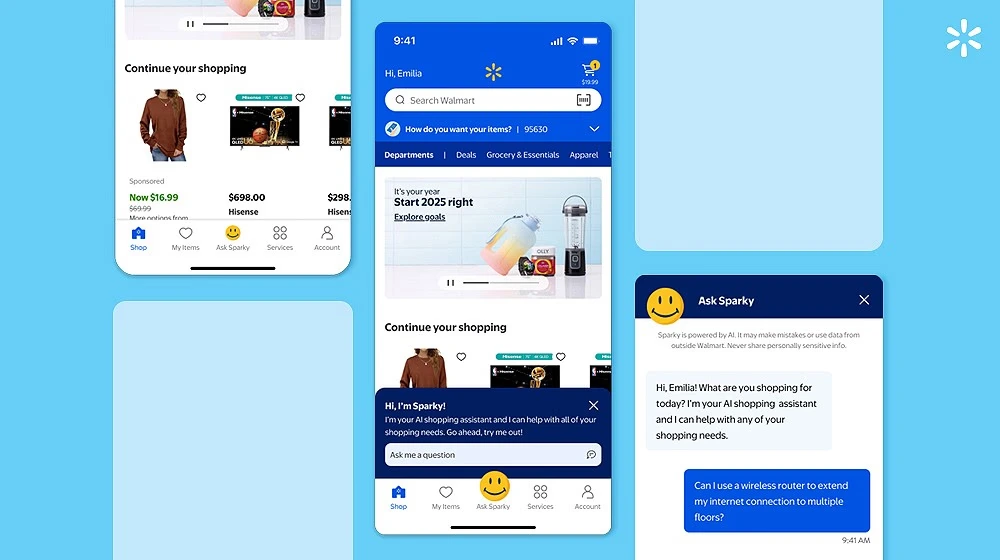
Walmart’s AI-powered shopping assistant, Sparky, helps customers compare products, understand reviews, and evaluate options before buying. By bringing relevant product information together, Sparky helps shoppers make more informed decisions without having to examine every listing individually.
Under the hood: Accurate comparisons rely on retrieval-augmented generation (RAG). The model answers only from retrieved product data, not from its own memory. Specs are pulled from the PIM (product information management) system and normalised so units and naming are consistent. Review summaries use aspect-based sentiment analysis, which scores battery life, build quality and similar aspects separately. Each claim should trace back to a source field, which keeps the model from inventing specs.
4. Checkout Assistance to Reduce Purchase Hesitation
Even when shoppers are ready to buy, questions about shipping charges, delivery dates, payment methods, discount codes, or return policies can make them pause. If they cannot find answers quickly, they may leave before completing the purchase.
How AI Chatbot Works Here
An AI chatbot for online shopping can provide help directly on the cart or checkout page, without making customers leave the purchase process. By connecting with product, delivery, payment, and store policy information, it can answer questions and explain the next steps.
Unlike cart abandonment recovery, which targets shoppers who have already left, checkout assistance helps customers resolve concerns while they are still considering the purchase. The checkout experience also depends on how customers interact with the interface. Following best practices for implementing conversational UI in eCommerce can help businesses design clear conversations and provide a straightforward path to human support when needed.
Key Benefits
- Answers questions without sending shoppers away from the checkout page.
- Clarifies delivery, payment, and return details before customers pay.
- Helps shoppers understand their options and next steps.
- Makes relevant assistance available at the point of decision.
- Addresses concerns that might otherwise prevent a completed purchase.
Real-World Example: Rare Beauty uses a chat widget on its cart page to help shoppers with common questions about orders, returns, shipping, and products while keeping the checkout button visible. This illustrates how timely assistance can be provided close to the point of purchase. An AI chatbot can extend this approach by answering questions using approved store information and connected systems.
Under the hood: The chatbot uses tool calling: it queries live APIs instead of answering from static text. Typical calls go to the shipping-rate calculator, the promo engine (to validate a coupon), payment-method availability, and pincode serviceability. These calls need low latency, ideally under 2 seconds, because the shopper is mid-purchase. The chatbot should never collect card details. Payment stays inside the PCI DSS–compliant gateway.
5. Post-Purchase Product Guidance and Repeat Purchases
A customer’s experience does not end when an order arrives. They may need help setting up a product, understanding its features, or finding the right way to use it. If they have a good experience, relevant follow-up assistance can also encourage them to return when they need another product.
How AI Chatbot Works Here
An AI chatbot can provide product-specific guidance after delivery, answer usage questions, explain care instructions, and direct customers to relevant manuals or tutorials. By using purchase history and product information, it can tailor its answers to the item a customer has bought.
The follow-ups should be based on the product and customer’s needs, rather than sending repeated promotional messages. Any recommendations should also respect customer preferences and consent for marketing communications. To make these interactions useful and trustworthy, businesses should also consider how to design human-AI interfaces that customers trust, with clear responses and a way to reach human support when needed.
Key Benefits
- Helps customers understand features, setup, and care instructions.
- Answers common questions without requiring a support ticket.
- Suggests compatible products or replenishment items when appropriate.
- Gives customers useful reasons to return when they need related or replacement products.
- Provides continued assistance beyond the initial transaction.
Real-World Example
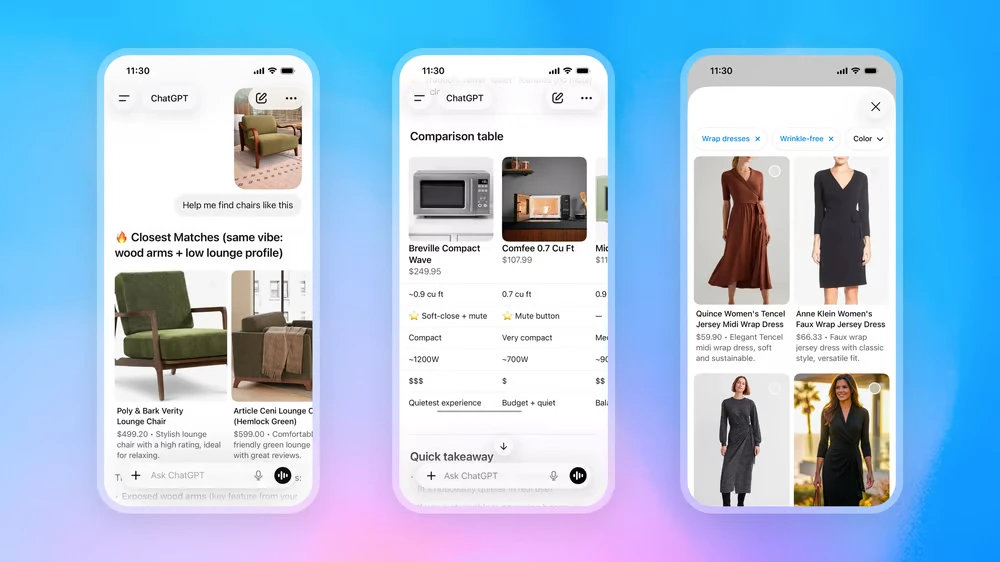
Sephora, the global beauty retailer, launched its app in ChatGPT in the US in March 2026. It provides curated beauty advice and personalized recommendations, with the option to connect a customer’s Beauty Insider account for recommendations informed by their preferences.
While this experience focuses on beauty discovery and shopping rather than post-purchase support specifically, it shows how customer context can help make product guidance more relevant.
Under the hood: Product manuals, care guides and FAQs are indexed into a knowledge base the chatbot searches with RAG. Purchase history from the OMS or CRM tells it which product variant the customer owns. Follow-ups are event-triggered (for example, delivered + 7 days, or a predicted replenishment date). Each one is gated by consent flags stored against the customer profile, as required under GDPR and India’s DPDP Act.
6. Order Tracking and Delivery Updates Through Chatbots
After placing an order, customers want to know when it will arrive, whether it has shipped, and if there are any delivery delays. When tracking information is difficult to find, they may contact customer support for updates that could otherwise be automated.
How AI Chatbot Works Here
An AI chatbot for order tracking connects with order management and shipping systems to provide updates on order confirmation, dispatch, estimated delivery dates, and shipment status. Customers can ask questions in everyday language instead of searching through emails or navigating multiple pages.
A shopper might ask, “Where is my order?” or “Has my package been shipped?” The chatbot can retrieve the latest available tracking information and explain the next steps if a delivery is delayed. If the carrier has not provided a new update, the chatbot should communicate that clearly rather than guess.
For retailers managing orders across websites, apps, and physical stores, building a scalable omnichannel platform can help connect order management, fulfillment, and delivery tracking across customer touchpoints.
Key Benefits
- Gives customers quick access to shipment information.
- Keeps shoppers informed about dispatches, delays, and estimated arrival dates.
- Helps customers understand delivery problems and available next steps.
- Automates repetitive tracking questions.
- Keeps customers informed after they complete a purchase.
Real-World Example

Flipkart offers a useful example of how order updates and customer support can work together. Through Flipkart Saathi on WhatsApp, customers can receive delivery updates, check order status, request delivery date or address changes, and get updates about delays. This shows how conversational channels can help shoppers manage deliveries without repeatedly contacting support.
Under the hood: The chatbot first verifies identity through a logged-in session or order ID plus OTP, before showing order details. It reads status from the OMS and from carrier APIs or shipping aggregators such as Shiprocket and AfterShip. Webhooks push status changes in real time, so the bot can proactively notify customers of delays instead of waiting to be asked.
7. Returns, Exchanges, and Refund Assistance
Customers may need to return an item because it does not fit, arrives damaged, or differs from what they expected. They may also want to exchange it for another size or check when their refund will arrive. If the process is unclear, they often contact customer support for help.
How AI Chatbot Works Here
An AI chatbot for returns and refunds can guide customers through the return process, explain eligibility rules, share pickup or shipping instructions, and provide refund status updates. When connected to order management and returns systems, it can retrieve order details and explain the next steps based on the store’s policies.
For example, a customer who wants to exchange a shirt for a different size can ask the chatbot about available options and the exchange process. If the return requires manual approval or the refund is delayed, the chatbot can explain the status or transfer the request to a support agent.
The chatbot should follow the retailer’s actual return policy rather than promise an exchange, approval, or refund before it has been confirmed.
Key Benefits
- Guides customers through the required steps.
- Helps customers understand refund progress and expected next steps.
- Automates routine questions about return policies and eligibility.
- Routes exceptions and complex cases to the appropriate support team.
- Makes returns and exchanges easier to navigate, encouraging customers to shop with confidence again.
Real-World Example
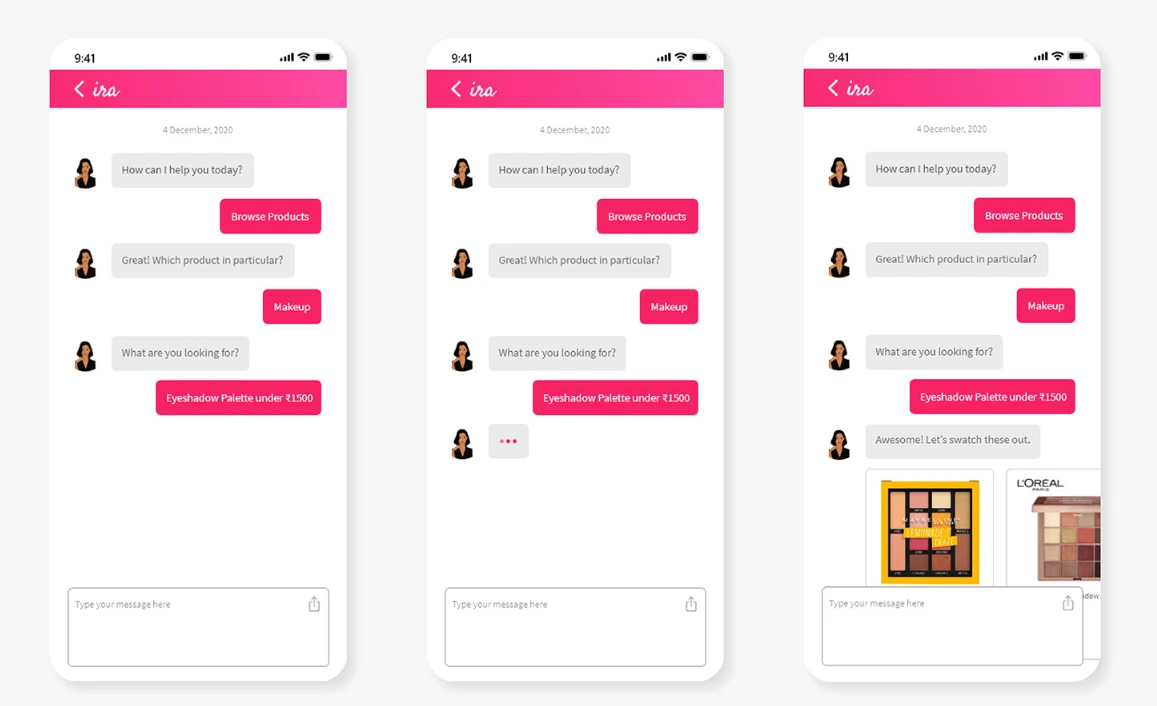
Nykaa, an Indian beauty and fashion retailer, introduced a conversational AI solution to handle routine customer queries, including returns, replacements, refunds, shipping, and payment issues. The chatbot helped customers get support through chat while reducing the workload on customer service teams.
Under the hood: Return eligibility is best handled by a rules engine that encodes the policy: return window, category exclusions, condition requirements. The language model should not interpret the policy freely. Agentic workflows can then create the return request (RMA), schedule pickup, and fetch refund status from the payment gateway. Exceptions are routed to human approval, such as high-value items, repeat returners, or fraud-risk signals.
8. AI Chatbots for Upselling and Cross-Selling
Customers often buy one item without realizing that a related product could also meet their needs. For example, someone buying a camera may need a memory card, while a customer purchasing a coffee machine may want compatible capsules. Showing unrelated products or pushing too many offers can make the shopping experience frustrating.
How AI Chatbot Works Here
An AI chatbot for upselling and cross-selling can suggest relevant products during a shopping conversation, based on what a customer is buying, their stated needs, and available product information.
Upselling: Suggests a higher-value option when its features better match the customer’s needs or budget.
Cross-selling: Recommends complementary products that work with the item the customer is considering.
Businesses can explore AI strategies for customer retention in D2C eCommerce to understand how personalized recommendations and well-timed offers can support repeat purchases and customer loyalty.
Key Benefits
- Encourages customers to consider relevant upgrades or add-ons.
- Matches suggestions to customer needs and selected products.
- Helps shoppers find accessories or complementary items that work together.
- Makes it easier to evaluate suitable options in one conversation.
- Uses customer preferences to suggest useful products during future visits.
Real-World Example
eBay uses AI to help shoppers discover relevant products and navigate its large marketplace. Its AI-powered shopping features can help customers find items that match their interests and explore related options. While product discovery is not the same as chatbot-led upselling or cross-selling, it demonstrates how AI can help shoppers identify products they may want to consider alongside their original search.
Under the hood: Complementary suggestions come from purchase co-occurrence (“frequently bought together”) and a product compatibility graph (camera → compatible memory cards). Ranking can weigh margin and live inventory so the bot doesn’t promote out-of-stock items. Frequency caps and relevance thresholds keep suggestions from turning into spam.
9. Customer Support Automation for Routine Questions
Online shoppers often contact support teams with routine questions about shipping policies, product availability, payment options, and order updates. Answering these queries one by one can increase response times, particularly during busy sales periods.
How AI Chatbot Works Here
An AI chatbot for customer service can answer common questions using the store’s approved information and help customers find the right support option. Connected to relevant store systems, it can also retrieve information such as order details or available delivery options. This type of chatbot automation in eCommerce gives customers quick answers while allowing support agents to focus on more complex issues.
The chatbot should also recognize when a request needs human attention and transfer the conversation rather than provide an uncertain answer.
Key Benefits
- Answers common questions without waiting for an agent.
- Helps customers outside business hours.
- Reduces repetitive queries handled by staff.
- Shares information based on approved store policies.
- Provides a clear path to human support when needed.
Real-World Example
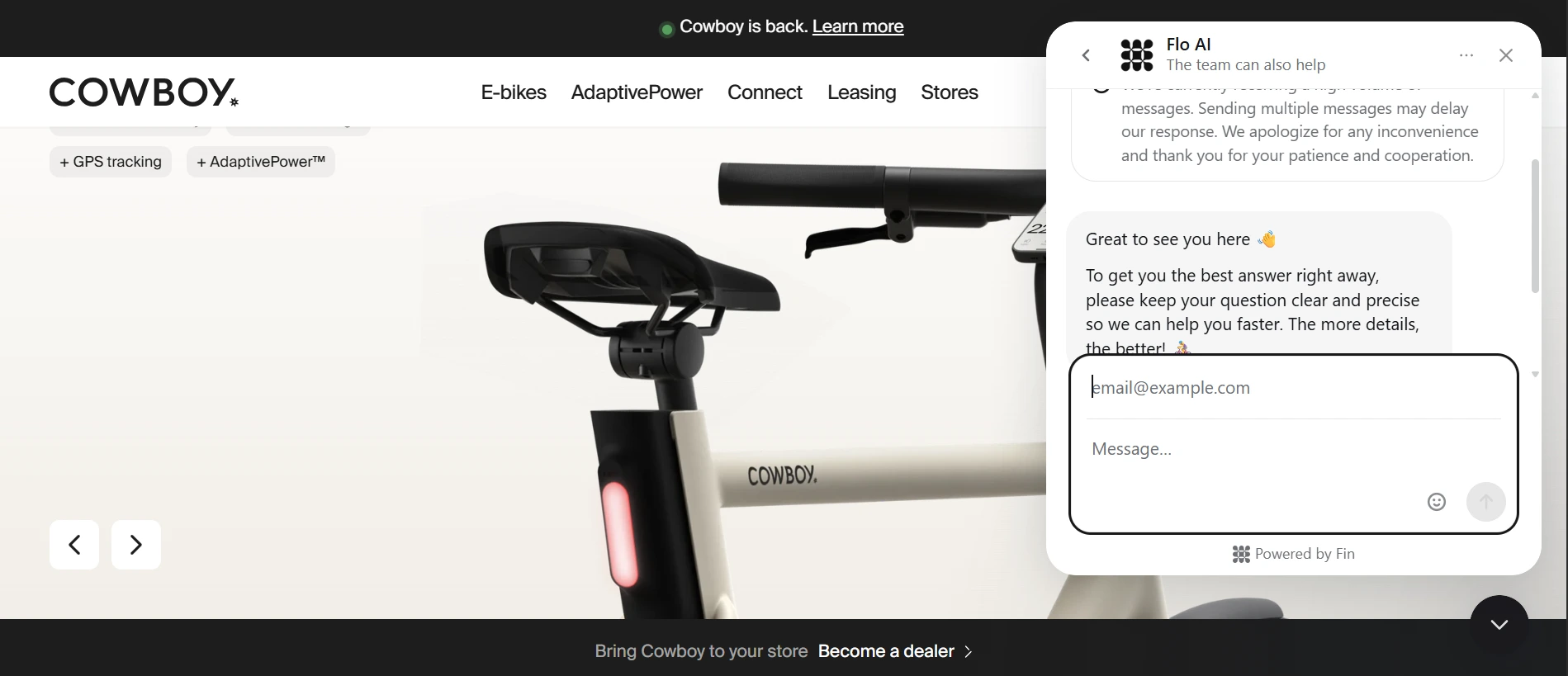
UK and European shoppers can look at Cowboy, an electric bike brand that uses an AI chatbot on its website to answer common questions, provide order-status updates, and direct customers to its FAQ resources. The chatbot also offers access to a human support agent when needed, showing how automated support can handle routine queries without removing the option of personal assistance.
Under the hood: Each message is classified by intent with a confidence score. Below a set threshold, the bot escalates instead of guessing. The handoff passes the full transcript and order context into the helpdesk (Zendesk, Freshdesk, Gorgias), so customers don’t repeat themselves. Responses are restricted to an approved knowledge base, with guardrails that block answers outside policy.
10. Cart Abandonment Recovery With AI Chatbots
Customers may add products to their carts but leave before paying because of unexpected delivery costs, questions about returns, payment concerns, or simple distractions. A reminder alone may not address the reason they left.
How AI Chatbot Works Here
An AI chatbot for abandoned cart recovery can follow up with shoppers who have agreed to receive messages or re-engage them when they return to the website. It can remind them about the items they left behind, answer questions about delivery or payment, and guide them back to checkout.
If a shopper hesitates because they are unsure about the delivery date, the chatbot can check the available delivery information and explain the options. If the shopper needs help with a more complex issue, it can direct them to a support agent.
The goal is to resolve purchase concerns and make it easier for customers to complete an order, rather than simply sending repeated reminders or discounts.
Key Benefits
Re-engages shoppers who leave without completing an order.
Answers questions that may prevent customers from checking out.
Refers to the products left in the cart rather than sending generic reminders.
Automates routine recovery conversations for the sales team.
Helps businesses measure recovered orders and revenue from chatbot interactions.
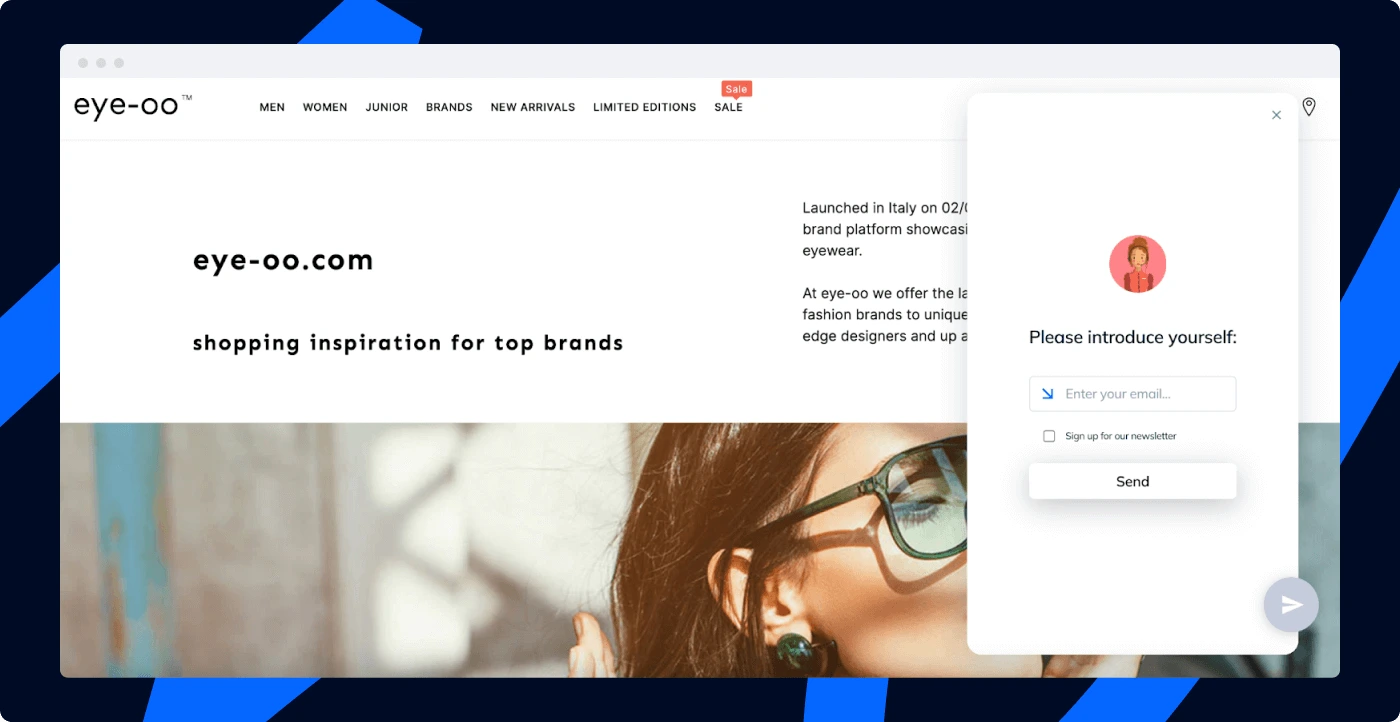
Real-World Example: Italian eyewear retailer “eye-oo” used AI-powered chat to answer questions about product authenticity, shipping, returns, and sizing, while also engaging shoppers who were about to leave with items in their carts. A published analysis of the case reports that the AI contributed to €1,600 in recovered sales from 537 abandoned-cart conversations in 2023.
The wider AI chat setup was also associated with revenue across other customer conversations, so that broader figure should not be treated as cart recovery revenue alone.
Under the hood: Recovery flows are triggered by cart events, such as a cart idle for 30 minutes with no checkout. On WhatsApp, outbound messages must use pre-approved templates sent only to opted-in users. The bot reads the actual cart contents and any checkout error logged, such as a failed payment or a non-serviceable pincode. That lets it address the real blocker. Recovered revenue should be measured with a defined attribution window, such as 24-72 hours.
How to Implement AI Chatbots in an eCommerce Platform
Implementing AI chatbots in eCommerce requires a clear plan for customer needs, system integration, and ongoing improvement. Businesses can start with a few high-impact use cases and expand as they understand what works best.
- Identify priority use cases: Focus on customer interactions where a chatbot can make shopping easier, such as product discovery, checkout assistance, or order tracking.
- Integrate with existing systems: Connect the chatbot with product catalogues, inventory, order management, and customer support tools. Unthinkable’s AI chatbot development services can support custom chatbot development and integration with business systems.
- Design relevant conversations: Use customer intent and context to provide helpful responses, guide shoppers through common tasks, and offer human support when needed.
- Test and improve performance: Track response accuracy, customer satisfaction, resolution rates, and conversion rates. Use these insights to refine chatbot responses and identify additional opportunities for automation, including those covered by AI solutions for eCommerce.
Core architecture of an eCommerce AI chatbot
- LLM + orchestration layer: manages the conversation, decides when to call tools, and enforces guardrails.
- Knowledge layer (RAG): product catalogue, policies, FAQs and manuals, indexed in a vector database.
- Integration layer: APIs to the commerce platform (Shopify, Magento, commercetools), OMS, inventory, payments, CRM and helpdesk.
- Channels: website widget, mobile app, WhatsApp Business API, Instagram DMs.
- Observability: conversation logs, accuracy evaluation, and hallucination monitoring.
Conclusion
AI chatbots in eCommerce can support customers throughout their shopping journey, from discovering products and comparing options to tracking orders and managing returns. They can also help retailers handle routine queries, offer relevant recommendations, and improve the overall shopping experience.
The key is to implement chatbot capabilities around actual customer needs, connect them with reliable business data, and continuously improve their performance based on customer feedback.
If you’re planning to build an AI chatbot for your eCommerce platform, get in touch with Unthinkable to discuss your requirements and explore a solution tailored to your business goals.
With the right approach, AI chatbots for eCommerce can make online shopping easier for customers while helping retailers improve support efficiency, encourage repeat purchases, and create more opportunities for sales.
About Author